trek-through-the-Maine-wilderness

1776: The First Year of Independence – Spring Turning Points

Written by James Richmond

This is the second in a series of articles highlighting the 250th anniversary of our nation’s independence, focusing on Albany County, New York, which, in 1776 stretched from Kingston north to Lake George. This series follows several articles published in 2025 under the title “1775: The First Year of Revolution,” also available at Saratoga250.com.
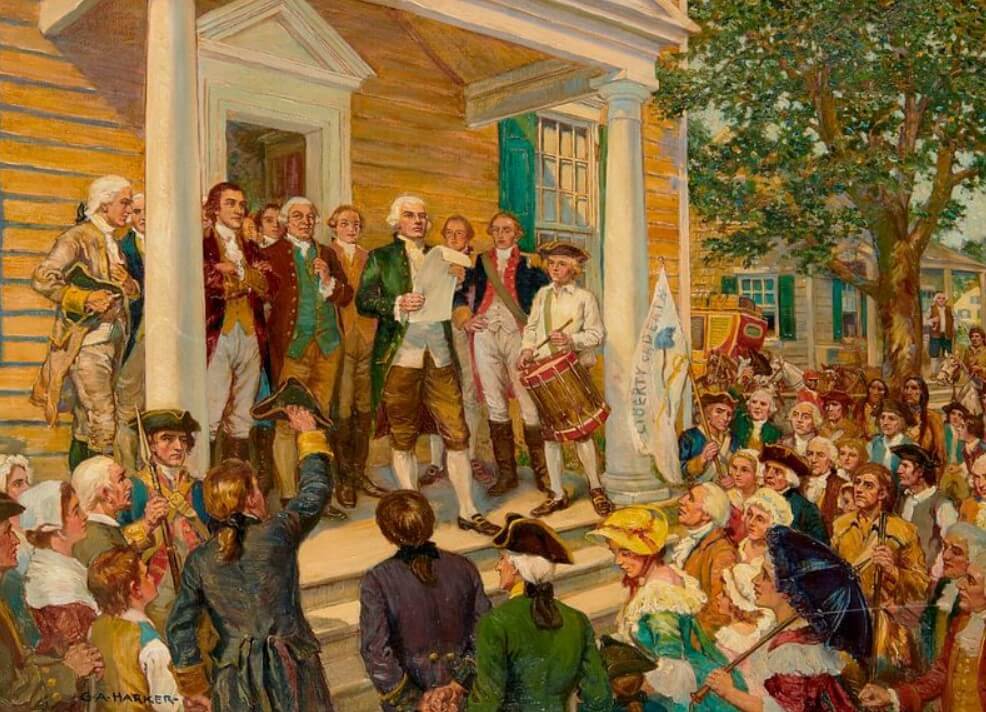
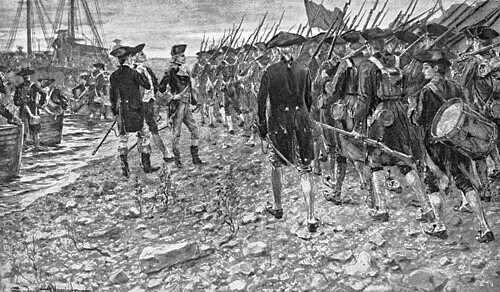
trek-through-the-Maine-wilderness

The American Invasion of Canada


In the spring of 1776, the rebellion against British rule by the United Colonies experienced several turning points that would shape the course of the conflict. Albany County had a front row seat for these events, which set the stage for THE Turning Point of 1777 and the local experiences that followed in the struggle for independence.

The Americans Retreat from Canada

After the failed attempt to capture Quebec City, and the death of General Richard Montgomery on the last day of 1775 (see 1775 article: The Invasion of Canada), the American army settled in for a winter siege outside the walled city under the command of Benedict Arnold. Four months later, British reinforcements arrived in two waves that sealed the fate of the American invasion of Canada. John Enys, an Ensign in the 29th Regiment of Foot, recounted the arrival of the first fleet on May 6.

We were no sooner on shore than we received orders to march out of the garrison. We left the town when to our great surprise the rebels had abandoned the place and that with so great a precipitation that they even left a field piece. Among other things that were found was the Commanding officer’s dinner which he had left at the fire.

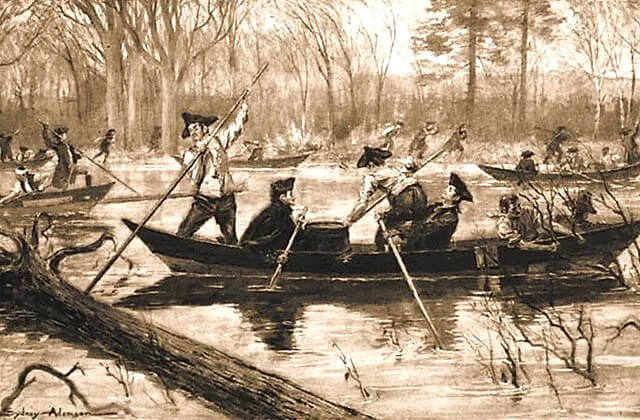
arrival of British fleet

Arrival of the British Fleet at Quebec in May 1776


This first wave was followed by a much larger British fleet that arrived at the end of May carrying 12,000 British and German soldiers including Major General John Burgoyne who would lead the ill-fated invasion of New York a year later.

While these British reinforcements were the immediate cause of the failed attempt to add Canada to the thirteen United Colonies, circumstances in the months after Montgomery’s defeat seems to have made that outcome inevitable.

The status of the American army was the first cause for concern. Just surviving through the Canadian winter, the invasion force was undermanned, undisciplined and sick. Overall commander of the invasion force Major General Philip Schuyler’s own health issues forced him to remain in Albany County. In a January 13th letter, he informed General Washington of the death of Montgomery and then summarized the situation.

I tremble for our people in Canada and nothing my dear sir seems left to prevent the most fatal consequences but our immediate reinforcement that is no where to be had but from you.

In reply, Washington understood the need but could not immediately satisfy it.

If I could be the happy means of relieving our fellow citizen now in Canada…but it is not in my power, since the dissolution of the old army. The progress of raising recruits for the new has been very slow and inconsiderable. In short, I have not a man to spare.

As a result of appeals to the Continental Congress and colonial governors, additional troops were secured and finally began traveling north during the winter over the frozen surfaces of Lake George and Lake Champlain. However, they moved in small groups, without proper supplies and, more importantly, without the leadership and discipline of Montgomery’s initial invasion force.  Schuyler lamented the result.

I am ashamed of the conduct of our troops. Tories and Whigs are indiscriminately the   object of plunder whenever a fair opportunity offers. Their ignorance and distain give the Canadians to much reason to complain of ill treatment.

Leadership of the Canadian campaign was another issue during 1776.  General Schuyler remained in New York conducting the campaign from Albany, Saratoga and Lake George. In Canada, Brigadier General David Wooster assumed command after Montgomery’s death. His relationship with Schuyler started off on the wrong foot in 1775 when the aging Connecticut General chaffed at his subservient role. In Montreal, he alienated many of the citizens there, both Loyalists and prospective allies. Benedict Arnold, wounded at Quebec, remained there on the siege lines  during the winter and in the spring exchanged locations with Wooster. Major General John Thomas was sent by Washington to take over for him but died of smallpox soon after arrival.  John Sullivan, who led the incursion into the Iroquois homeland three years later, oversaw the Americans retreat. These constant changes at the top added to the dysfunction of the campaign.

Preparing for the spring thaw, General Schuyler organized construction of a large fleet of bateaus under the supervision of a distant cousin. Hermanus Schuyler oversaw the construction of two boathouses at Fort George where a contingent of local carpenters familiar with the construction process turned out 100 bateaus by the end of March. 

With the breakup of the ice, additional reinforcements proceeded to Canada. Upon arriving at the siege lines around Quebec City, they found an army in disarray.  In March, Benedict Arnold reported that of his 2,500 men, over 600 were sick with smallpox. And the troops that had endured the year end attack were going home. In December, Montogomery had persuaded many to reenlist for four months. It was little wonder that newly arrived General John Thomas found these troops whose enlistments ended on April 15  “cannot be prevailed upon to continue longer in this country.”

However, the problems with the army were not the only – and arguably not the principal reason – for the failure of the first campaign of the Revolution. Much of the responsibility can be attributed to the inattention of the Continental Congress. While authorizing the creation of additional regiments to support the invasion, they were unable to provide the resources necessary for victory. Supplies, arms and ammunition were always in short supply, and the lack of specie to purchase the necessary equipment and finance Canadian militia units who opposed British rule doomed local support for the cause. 

General Schulyer, in addition to pleading with Congress for hard money for local operations, took it upon himself to provide financial support. In February, he advised General Wooster of his personal commitment to the cause.

I have with much difficulty and by giving my own security been able to raise £2,139 New York currency, which I will send you by Capt. Benson, as it is very uncertain when we will receive anything from Philadelphia. I will continue to procure as much more as I possibly can, and forward it to you as fast as collected.

Congress also overlooked another critical aspect of extending the revolution to Canada. In October 1774 the First Continental Congress had established the structure that would sustain the Revolution during the dark days of lost battles and failed campaigns. The Continental Association reached out to citizens throughout the thirteen colonies, encouraging them to make a choice between remaining within the British Empire or supporting the decisions of the Congress.  Committees were formed in counties and communities to rally support, first for resistance to British overreach, and later independence. (see 1775 articles). None of this ground level political activity was established in Canada for the prospective Fourteenth State.

Many leaders on the front lines of this campaign recognized this deficiency. During the initial stages of the campaign in the fall of 1775, General Montgomery pressured Congress to establish a committee to address the political issues which they did.  Led by Robert R. Livingston, Montgomery’s brother-in-law, in November they traveled through Albany to meet with Schuyler at Ft. Ticonderoga, offered little beyond moral support, and promptly headed back to Philadelphia without offering plans for solidifying any commitment from the Canadians.

Schuyler was incensed and in February pressed Congress once again.

I dare confidently venture to prophecy that unless a respectable Committee of Congress be with all expedition sent to Canada, our affairs will not only greatly suffer, but that, in all probability we shall lose the affections of the Canadians. 

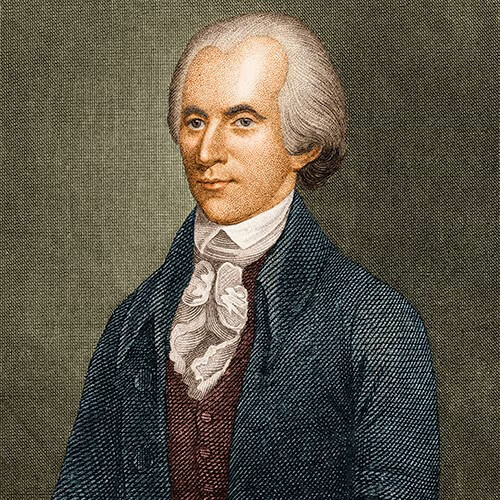
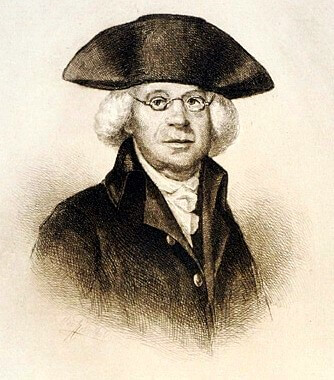
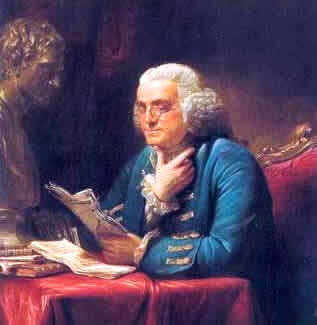
benjamin_franklin

Benjamin Frankin ca 1775


This time, Congress agreed to appoint a first-string committee, led by Benjamin Franklin himself. Other members included notables Samuel Chase, Charles Carroll and his cousin, Father John Carroll, from Maryland. As Catholics, the Carrolls were expected to be influential with Canada’s French Catholic population.

Unfortunately, a month passed while the commissioners waited for their instructions from Congress, which they finally received on March 20th. Long on concepts but short on specifics, they were to

Press them to have a complete representation of the people assembled in convention, with all possible expedition, to deliberate concerning the establishment of a form of government, and a union with the United Colonies.

They left Philadelphia on March 29 and arrived in Albany on April 8 where Schuyler joined them. Together, they proceeded to the General’s Saratoga estate waiting for the frozen lakes to thaw. Reports from Canada told of the deteriorating situation there and Franklin was not optimistic, writing to John Hancock “I am afraid that we shall be able to effect but little there.” Finally meeting with Benedict Arnold in Montreal on April 29 they immediately were confronted with the lack of specie. The ferry hired to take them across the St. Lawrence River would not accept paper money. The commissioners minced no words in their first report back to Congress on May 6.

If hard money cannot be procured and forwarded with dispatch to Canada, it would be advisable, in our opinion, to withdraw our army and fortify the passes on the lakes to prevent the enemy from making depredations on our frontiers.

Unknown to them at the time, this report was written on the same day that British reinforcements began arriving at Quebec. The final collapse happened quickly. The commissioners left after a 10-day visit and the invading American army fell back to Sorel where the Richelieu River joins the St. Lawrence. However, under the mistaken belief that Trois-Rivieres was lightly held, on June 7th General John Sullivan ordered an attack on the town midway between Montreal and Quebec.  Not realizing that the second, and larger, British fleet including General Burgoyne had just arrived there, the Americans were routed and over 200 were captured.

From that point, the race was on to withdraw from Canada as fast as possible, just avoiding the oncoming British army as they abandoned Chambly and St. John, which had been hard won in the fall invasion. Brigadier General Arnold supervised the retreat and left Canada in the last bateau.

The battle was lost but the war had just begun.  Harbingers of the difficulty of future British efforts to invade New York are found in the journal of William Digby, a Lieutenant in the 53rd regiment of Foot who arrived with Burgoyne’s fleet. 

Thus was Canada saved with much less trouble than was expected. How to pursue them over Lake Champlain was our next thought, and the tediousness that threatened our operations necessary for so great an expedition was far from pleasing.

The Loyalists Retreat to Canada

As might be expected, the Canadian campaign occupied much of the time and effort of Schuyler, and Albany patriot leadership during the first six months of 1776. However, another situation closer to home may have had an even greater long-term impact on local citizens of both Albany and Tryon County to the west in the Mohawk valley. 

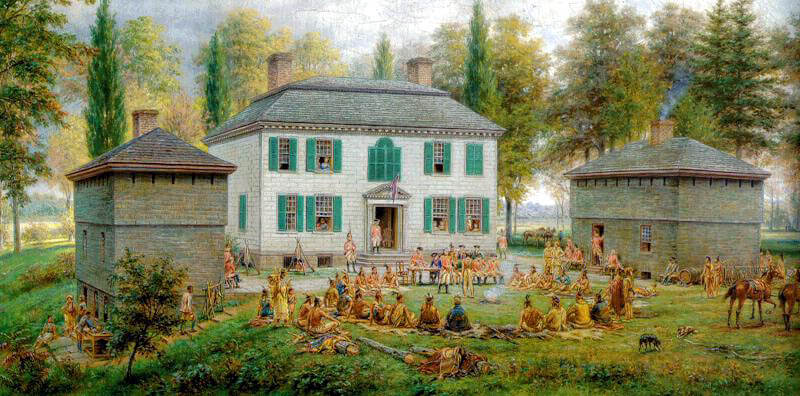
Sir William Johnson who had appointed his nephew Guy Johnson his successor as Indian Commissioner prior to his death in 1774, fled to Canada in June 1775, leaving behind William’s son John as the families’ patriarch. The Johnson’s allegiance to the British cause was backed up by their support among the Iroquois, especially the Mohawk nation. In addition, they could count  on several hundred Scotch-Irish tenant farmers, recently brought to America by Sir William.  Although the Mohawks had pledged neutrality during conferences the previous year, the Tyron County patriots were in constant fear of an uprising in the valley. (see 1775 article: The Iroquois Dilemma)

In late December 1775, the Continental Congress received intelligence that a quantity of arms and ammunition were concealed in Tryon County and advised General Schuyler “to take the most speedy and effectual measures for securing the arms and military stores, and for disarming the tories, and apprehending their chiefs.”  The Albany Committee agreed to immediately send 700 militiamen westward to confront John Johnson. In attempting to avoid an open fight, Schuyler notified both the Mohawks and Johnson of their mission and proposed a meeting to negotiate a settlement. An agreement was reached, Schuyler entered Johnstown and his tenants gave up their arms. The Baronet himself was paroled and his travel restricted.

This uneasy truce lasted for four months. In late April the Albany Committee informed Schuyler that Johnson was recruiting loyalists to take up arms against Patriots in the valley. Vowing to thwart the “diabolical designs of those miscreants”, he prepared to meet force with force. The General redirected elements of the 3rd New Jersey regiment led by Colonel Elias Dayton to march west to Johnstown to capture Sir John and his Scottish Highlander followers.

Interestingly, in a May 13th letter to Johnson, Schuyler, after revealing he was aware of his activities, told him exactly what he intended to do.  

It is therefore necessary for the Public safely of the inhabitants that I should put it out of your power to embroil them in domestic confusion and have therefore ordered you to be made a close prisoner, hereby discharging you from your parole, and sent down to Albany to be thence conveyed to his Excellency General Washington.

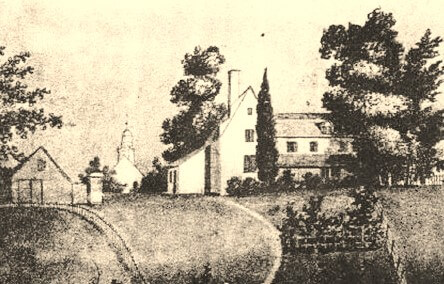
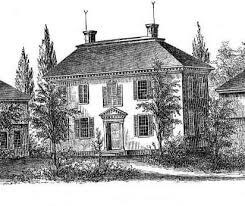
Johnson Hall

Johnson Hall


By warning Johnson, Schuyler may have been hoping to avoid a fight with not only Johnson’s Loyalists, but with the Mohawks who the General had been endeavoring to keep neutral. Given their connections to the Johnson family, both groups were sure to side with the British once Sir John finally declared his loyalty to the Crown.

 Forewarned, on May 19 Johnson left precipitously with about 200 tenants, leaving behind their families including his wife, who was home to greet Dayton’s regiment when they arrived at Johnson Hall. Mrs. Johnson was brought to Albany and later given a pass and eventually rejoined her husband in New York City later in 1776. 

While there, an incident occurred that illustrates the complexity of military leadership in any conflict.  Several of Dayton’s officers were accused of plundering Johnson Hall.  Lieutenant McDonald was singled out, found guilty and cashiered from the service. Schuyler sought the opinion of Washington about the higher-ranking officers.

As I was apprehensive that a public conviction of so many officers would reflect too much disgrace on our troops…permit me therefore to entreat your opinion, whether it would be prudent for me to accept the concessions they offer…and thus to bury the affair, or whether I ought to have them tried.

To his credit, Washington suggested that the Court Martial should proceed. At a November trial in Albany, the charges were found “malicious and groundless” and the officers were acquitted. Apparently, Schuyler’s concerns were shared by the military tribunal.

Attached to the Continental Army, the 3rd New Jersey nominally reported to General John Sullivan the last American commander in Canada. However, Schuyler prevailed on him to keep the Jersey men in the Mohawk Valley, fearing that Johnson might be lurking in the area set on retaliation, and to round up Loyalists left behind.

In fact, Johnson had headed north, led by Mohawk guides who skirted around the Americans busy outposts at Fort George, Fort Ticonderoga and Crown Point. After a month suffering in the Adirondack wilderness, they arrived in Montreal on June 19 and became the nucleus of the King’s Royal Regiment. The die had been cast. Together with Iroquois warriors led by Joseph Brant, brother of Sir William Johnson’s wife Molly Brant, the KRR would wreak havoc on the New York frontier for the remainder of the War.

1776 will rightfully always be celebrated as our Year of Independence, and the 1777 victory at Saratoga, the great Turning Point of the war. On a national scale, there is no argument about that. However, on the farms and in the villages of upstate New York the turning points of 1776 would bring into focus both the meaning and the consequences of Independency.


Sources:

Benedict Arnold’s Navy, James L. Nelson, 2006

Citizen Soldier: The Revolutionary War Journal of Joseph Bloomfield, Edited by Mark Lender and James Kirby Martin, 2018

Journal of Lieut. William Digby, in The British Invasion from the North, 1887

Letters of Delegates to Congress 1774-1789, Paul H. Smith, editor, Library of Congress, 1985

Minutes of the Albany Committee of Correspondence 1775-1778, compiled by James Sullivan, State Historian, 1923

No Turning Point: The Saratoga Campaign in Perspective, Theodore Corbett. 2012

Papers of Philip Schuyler, New York Public Library Digital Collections, Letter book #1 and #2

Proud Patriot: Philip Schuyler and the War of Independence 1775-1783, Don R. Gerlach. 1987

Revolutionary War Journal – Non-Profit Dedicated to Historical Education of the American Revolution and the Colonial Period

The 3rd New Jersey in New-York: Stories from ‘The Jersey Greys” on 1776, Philip D. Weaver, 2020

The American Journals of Lt. John Enys, compiled by Elizabeth Cometti, 1976

The Battle for the Fourteenth Colony, Mark R. Anderson, 2013

Keep America’s Turning Point Alive icon-star-red

Keep America’s Turning Point alive for generations to come by making a tax-deductible donation to the Campaign for Saratoga 250, Inc. Our certified 501c3 nonprofit organization is dedicated to promoting awareness, education, and preservation of critical assets of the Battles of Saratoga. Your support will help promote historical awareness of new generations of people across the region, nation, and globe.

Learn More

Continue reading

1776: The First Year of Independence – Common Sense

Written by James Richmond

This is the first in a series of articles highlighting the 250th anniversary of our nation’s independence, focusing on Albany County, New York, which, in 1776 stretched from Kingston north to Lake George. This series follows several articles published in 2025 under the title “1775: The First Year of Revolution,” also available at Saratoga250.com.

1775 Invasion Crown point Revolution

Benjamin Franklin Woodcut – Albany Plan of Union 1754


The British Constitution

The Declaration began with a list of thirteen accusations against the King of England, assisted by “Evil Counsellors, Judges and Ministers employed by him… to subvert…the Laws and Liberties of this Kingdome.”  These charges pointed out his specific illegal actions, including

  • Assuming and exercising a Power of dispensing with and Suspending of Lawes without the consent of Parliament;
  • Raising and keeping a standing army within this Kingdom in time of Peace…and quartering of Souldiers contrary to law;
  • Violating the freedom of Election of Members to serve in Parliament;
  • Excessive Bayle required to persons Committed in Criminal Cases to elude the benefit of Lawes made for the liberty of Subjects;
  • Illegal and cruell punishments inflicted.

Readers with a keen interest in our nation’s birth would recognize some of these accusations as representative of those in our Declaration of Independence. But they may also sense that something seems off. And they would be correct. These charges were levied 85 years earlier against the recently deposed King James II. Known as the Declaration of Rights, it listed these accusations as well as other actions that would henceforth be prohibited upon the ascension of William and Mary as King and Queen of England. This “Glorious Revolution” of 1688 formed the foundational principles of liberty which British citizens on both sides of the Atlantic used as a touchstone to assess the actions taken by the British government in the years leading up to the American Revolution.

This unwritten constitution was soon codified by John Locke in “The Second Treatise of Government”, published the following year. In it he outlined the powers of the people to curb absolute authority of both King and Parliament.  This constraint was manifested in adherence to laws “for the common good” which formed the basis for the social contract between rulers and their citizens. Stating “where law ends, tyranny begins” he defined the difference between just and unjust kings:

The difference betwixt a king and a tyrant consists only of this: That one makes the laws the bounds of his power, and the good of the public the end of his government; the other makes all give way to his own will and appetite.

The intellectual leaders of the Revolution – John Adams, Thomas Jefferson and others – relied on Locke and other writers to form the basis for many of the well-known precursor documents to the Declaration of Independence, including Jeffersons 1774 “Summary View of the Rights of British America,” and the “Declaration and Resolves of the First Continental Congress” (October 1774). However, even these focused more on the illegal actions of the Parliament rather than a direct attack on the Monarchy.   

The Desire for Reconciliation

To what extent did these theoretical arguments influence colonists in the year leading up to our Declaration of Independence? What other events shifted their view from reconciliation to revolution to independence during that time? Actions on the ground – open warfare at Lexington and Concord, Bunker Hill, and the Invasion of Canada are often cited as critical factors – and they were. However, there are other dimensions to the story.

In fact, in 1775 the majority of the delegates to the Continental Congress and the colonists they represented back home were loath to take that dangerous step, both from a natural affinity for their British homeland and fear of the unknown consequences.

Even as the Year of Independence began, many still hoped that a final break with the mother country could be avoided.  Throughout 1775, the Continental Congress certainly had been providing mixed messages. While establishing an American army lea by George Washington and authorizing General Schuyler to launch an invasion of Canada, their petitions to the King still insisted they were defensive acts against Ministerial aggression.

Two documents forwarded to King George in July 1775 confirmed this hesitation to cross the Rubicon with a final break from the British Empire.  In The Causes and Necessity of Taking Up Arms authored by Thomas Jefferson and John Dickinson, Congress justified their actions, but concluded on a conciliatory note:

Lest this declaration should disquiet the minds of our friends and fellow subjects…we assure them that we mean not to dissolve that Union which has so long and so happily subsisted between us. We have not raised armies with ambitious designs of separating from Great Britian.

In the second missive known as The Olive Branch Petition, Jefferson and Dickenson pleaded with the King “that such statutes as more immediately distress any of your Majesty’s colonies may be repealed.”

‘TIS TIME TO PART

While many hoped and prayed for a reconciliation, the British response soon became clear. In a speech opening Parliament in November, the King laid down the gauntlet, stating his “firm and steadfast resolution to withstand every attempt to weaken or impair the supreme authority of this Legislature over all the Dominions of my Crown.” Taking their direction from their King, Parliament declared that Massachusetts was in a state of rebellion and passed the Prohibitory Act, prohibiting all commerce with the colonies “during the continuance of the Rebellion.”

These decisions that squashed any hope of reconciliation reached the American coastal ports in January 1776. Coincidently, that same month a new pamphlet was published and quickly spread throughout the colonies. Written in plain language and not relying on theoretical arguments, it provided the justification for the final step toward Independence. Read and discussed in taverns throughout the colonies – including New York, Albany and the surrounding countryside – it was accepted as Common Sense. Most began to realize that there was no turning back, no return to dependency.

Many assumed Common Sense was written by one or more leaders of the Continental Congress – Jefferson, Adams or maybe even Benjamin Franklin, who had proposed a Plan of Union for the colonies in Albany in 1754. Instead, recent arrival Thomas Paine was the author. However, soon after its first appearance, Samuel Adams wrote two essays, Candidus and Sincerus which complimented Paine’s arguments. They were then printed together along with Common Sense, which only enhanced its impact. Over 120,000 copies were printed and read by many more. For colonists traumatized by open conflict, their hopes for reconciliation dashed, these new polemics provided not only the rationale – but also the courage to take that next step.

Thomas Paine 1737-1809

Thomas Paine 1737-1809

In Common Sense Paine challenged the case for reconciliation made by its supporters. He argued that the British government’s actions were not just a failure of leadership, but the result of a defective system. The twin tyrannies of a heredity monarchy and an aristocratic parliament inherently abridged the freedom of British citizens on both sides of the Atlantic. Paine also attacked the assumption that the colonies risked economic ruin if they broke away from the British Empire. In fact, an independent “Continental Union” would prosper, uninhibited by conflicts between European Powers that restrict trade and often lead to war.  He went on to sketch out a remarkably prescient vision of how an independent national government might be organized as a Republic foreshadowing the structure institutionalized by the US Constitution 15 years later.  His bottom line struck a chord with Americans lamenting the past and fearing the future.  “Everything that is right or natural pleads for separation: “TIS TIME TO PART.”

The Religious Influence

The citizens of Albany County were certainly aware of all these events and arguments as the Year of Independence dawned. Opinions were formed during animated discussions on the streets of the city, among the long-established Dutch estates along the rivers, in the numerous taverns where men gathered to hear and share the news, and among the newly arrived neighbors from New England focused on establishing pioneer communities in the wilderness.

Also discussed in their churches. Many of the first arrivals to American shores were known as Dissenters escaping from what they viewed as the oppressive restrictions on their beliefs by the government-led Church of England. Pilgrims and Puritans in New England, as well as Dutch Reformed and German protestants in New York and Pennsylvania, were all driven by the desire for religion freedom, but often created their own top-down theocratic structures.

The Pine Tree Flag 1775

The Pine Tree Flag 1775

As the storm clouds of Revolution threatened, colonists turned to God for guidance. Both secular leaders and ministers relied on an “Appeal to Heaven” to support their call for Independence. John Locke had proposed that step in his Second Treatise: “If any men find themselves aggrieved and think the prince acts contrary or beyond trust…the appeal then lies nowhere but to heaven.” Patriots extended that concept to justify revolution against tyranny. The Pine Tree Flag symbolized the concept and was first flown on American Naval vessels and at the Continental Army’s encampment surrounding Boston in the fall of 1775.

The religious institutions in New York, and by extension Albany County, reflected the history of the colony. The Dutch established New Netherlands in 1624 until the British gained control 40 years later.  By the time of the Revolution, the Calvinistic Dutch Reformed Church was still the principal denomination among the Dutch descendants in Albany County which included Rensselaer Manor.

Dutch Reformed Church at Saratoga ca 1775

Dutch Reformed Church at Saratoga ca 1775

The First Church of Albany was the oldest church in upstate New York, founded in 1642. Several satellite congregations gathered adherents in Niskayuna, Schodack, Schaghticoke and Saratoga. Already chafing against British rule in the years leading up to the Revolution, their members overwhelmingly supported Independence. English traders, merchants and government officials attended St. Peters, the only Anglican congregation in the county. St. Peters was soon to close its doors as their Loyalist members fled to New York City and Canada.

In the years after the French and Indian War, New England settlers began to arrive in the county, bringing with them the dissenting religious experience of their forebears, which had undergone a significant upheaval known as the Great Awakening in the 1740s.  Anglican minister George Whitefield toured the colonies, speaking to large crowds concerning the need for a personal relationship with God, and challenging the authority of their church leaders.  

Especially in Connecticut, this bitter struggle between the conservative church hierarchy – the Old Lights – and those more focused on evangelical individualism – the New Lights – empowered communities there to stand up to authority. And it so happens that a significant majority of new arrivals in Albany County in the years leading up to Independence were Connecticut New Lighters.

The sermons of several Connecticut ministers provided guidance to help their congregants process the fast-moving events of 1775 and 1776. Rev. Dan Foster of Windsor published a compilation of six sermons in “A Short Essay on Civil Government” clearly outlining the tipping point:

When the supreme magistrate, by an arbitrary, illegal use of power, becomes a tyrant, he then ceases to be a magistrate; and his subjects are no longer bound by any laws of God, or nature, to obey him.

The Saratoga District became the home of many settlers exposed to similar sermons in their former churches. The first Connecticut church community to relocate was the Congregational church of Canaan, Litchfield County which moved to Stillwater, New York in 1762. Many of their members joined the Albany County Militia’s 13th regiment formed in 1775.

In 1768, Rev. Eliphalet Ball, a Yales graduate and ardent New Lighter, left his Presbyterian church in Bedford, New York on the Connecticut border and, along with several families from his congregation, purchased homestead lots available for sale in the newly surveyed lands of the Kayaderosseras Patent north of Albany.  In 1775, Ball formed an independent church at “Balls-town” based on the principles of his Presbyterian beliefs. Of its twenty-five charter members, all but three families were subsequently represented in the 12th regiment.  It is not a surprise that the Ballston and Saratoga districts became hotbeds of support for independence leading up to the Declaration.

Underpinned by British concepts of freedom, propelled by the outbreak of hostilities, rejected by their King and Parliament, and strengthened by their religious connections with their neighbors, most Albany County residents were prepared to take the final step to Independence as 1776 unfolded.

Sources:

A Short Essay on Civil Government, Reverend Dan Foster, 1775

American Scripture: Making the Declaration of Independence, Pauline Maier, 1997

Common Sense, Thomas Paine, January 1776

History of Saratoga County, Nathaniel B Sylvester, 1878

Shadows: The Life and Times of Eliphalet Ball, Katherine Briaddy, 1991

The Causes and Necessity of Taking Up Arms, Thomas Jefferson and John Dickinson, 1775

The Common Cause, Robert G. Parkinson, 2016

The Declaration of Rights, London, 1688

The Second Treatise of Government, John Locke, 1690

The Spark of Independence, History Book Club, 1997

The Story of Old Saratoga and History of Schuylerville, John H. Brandow, 1900

The Will of the People: The Revolutionary Birth of America, T.H. Breen, 2019

Under the Cope of Heaven, Patricia U. Bonomi, 1986

Keep America’s Turning Point Alive icon-star-red

Keep America’s Turning Point alive for generations to come by making a tax-deductible donation to the Campaign for Saratoga 250, Inc. Our certified 501c3 nonprofit organization is dedicated to promoting awareness, education, and preservation of critical assets of the Battles of Saratoga. Your support will help promote historical awareness of new generations of people across the region, nation, and globe.
Learn More

Continue reading

1775 Invasion Crown point Revolution

1775: The First Year of Revolution – The Invasion of Canada

Written by James Richmond

This is the seventh in a series of articles highlighting the 250 th anniversary of the real beginning of the American Revolution in upstate New York, focusing on Albany County which, in 1775, stretched from Kingston north to Lake George.

1775 Invasion Crown point Revolution

Northern Army embarking from Crown Point August 31, 1775


For the first six months of 1775, Albany County was one step removed from the center of action in the First Year of Revolution. That is not to say the county remained uninvolved in the resistance to the ministerial actions of the British Crown, as described in previous articles in this series. Albany leadership organized in support of the Continental Association. Local districts formed committees and organized militia units. Loyalist leaders such as Guy Johnson were forced to retreat to Canada, others were under scrutiny. The Iroquois Confederacy, predisposed to support its British protectors, were encouraged to remain neutral in this dispute between brothers.

However, the growing conflict was soon to have a more direct impact. Beginning in July 1775, Albany County played a significant role in the first American military campaign of the Revolutionary War. With the appointment of Philip Schuyler to command the Northern Department of the Continental Army, Albany and the waterways of the “Great Warpath” became center stage in this campaign.

Immediately the Continental Congress struggled to make an important decision. Should the thirteen “United Colonies” seek to add a fourteenth? In Philadelphia, the initial answer was “No.” On June 1st, Congress resolved to defend Fort Ticonderoga and Crown Point, captured in May by Ethan Allen and Benedict Arnold, but opposed military action “by any colony, against or into Canada.”

Four weeks later, Congress reversed that decision on the strength of a letter received by the Albany Committee citing intelligence provided by Dirck Swart. A member of the Saratoga District Committee operating undercover in Canada, Swart passed on two critical pieces of information. First, that “the French Caughnuago Indians had taken up the hatchet in support of the British cause.” Secondly, that the British garrison at Saint Jean on the Richelieu River was “building floating batteries and boats”, presumably in preparation for an attack on the American held forts along Lake Champlain.

The Continental Congress jumped into action…sort of. On June 28th they directed General Schuyler “to take possession of Saint Jeans and Montreal if he finds it practicable and not disagreeable to the Canadians.” This ambiguous order highlights the dilemma facing the Americans. Focused on defending liberty and freedom from the overreach of the Ministerial government, the prerequisite for an invasion required the concurrence of the Canadian people that they too were being abused. Determining their mindset would prove an important consideration in the decision to proceed with any invasion. In fact, there was significant support
for the American cause there which contributed to the decision to begin the campaign.

Schuyler arrived at Ft. Ticonderoga on July 18th, and over the next month was able to assemble the troops and supplies necessary to launch the invasion. It was not an easy task. Regiments authorized for the Northern Army were in various stages of assemblage. At Ticonderoga he was met by a mere 100-man garrison. Six weeks later 2000 men were quartered there and another 550 at Crown Point, the army’s most northerly post.

Principally consisting of four newly formed regiments from New York and others from Connecticut, Schuyler first encountered the friction between “Yorkers” and “Yankees” that would come back to haunt him two years later. One principal antagonist was 65-year-old General David Wooster who believed that his Major General commission from Connecticut placed him above the authority of the two generals in the Northern Army appointed by the Continental Congress. Schuyler challenged him:

I am now just informed that you have called a General Court Martial at Fort George on your way up here [to Ticonderoga], a conduct which I cannot account for, unless you consider yourself my superior, and that cannot be in virtue of your appointment by Congress by which you are a younger Brigadier General than Mr. Montgomery…You will therefore Sir please give me an explicit answer to this question: Whether you consider yourself and your regiment in the service of the Associated Colonies and yourself a younger Brigadier General in that service than Mr. Montgomery or not?

Wooster offered a conciliatory reply: “I shall consider my rank in the army what my commission from the Continental Congress makes it, and I shall not attempt to dispute the command with General Montgomery at St. Johns.” His regiment would join the invasion force and he would personally play a significant role in the campaign as commanding general in Montreal during the occupation.

These intercolonial disputes affected other army functions including the commissary and medical departments. Schuyler was successful in installing his own men to run these operations. His relative Walter Livingston led the procurement effort over the protests of Connecticut appointed Elisha Phelps. Livingston was supported by Albany Committee members and merchants Jacob Cuyler and John N. Bleeker with their connections to local suppliers. For Hospital Director, Congress approved Schuyler’s appointment of his own doctor, Samuel Stringer who also ran afoul of General Wooster regarding the status of Connecticut soldiers under the doctor’s care. In this first campaign of the “United Colonies” acting as a cohesive force was a work in progress, requiring both strong leadership and diplomacy. By all accounts, Philip Schuyler displayed those skills.

Troops and supplies were certainly key to the success of the invasion, but so was transportation. The army could not walk to Canada – boats were required to swiftly move northward down Lake Champlain. During the summer Schuyler facilitated the construction of dozens of bateaux and larger vessels suitable for naval warfare, garnering the necessary materials and labor. Skilled carpenters were one of his most critical needs. After the Albany Committee sent 10 carpenters to the main boat construction site at Lake George in July, Schuyler pressured them to send 20 more and fast, to expedite construction. By the end of August these boats provided the capability to transport 1,300 troops along with provisions for three weeks. Another element was in place for launching the invasion.

General Richard Montgomery

General Richard Montgomery

On August 18th, Schuyler returned to Albany to participate in the conference with the Iroquois nations (discussed in article five) leaving final preparations for the invasion in the hands of General Richard Montgomery, next in command. Montgomery was a veteran of the French and Indian War, rising to the rank of Captain before returning to England. Ten years later he sold his commission, moved to America, purchased a farm north of New York City and married the daughter of Robert Livingston, gaining immediate recognition among the Colony’s political establishment. In June 1775, at the age of 37 he was appointed a brigadier general and assigned to the Northern Army by George Washington.

Arriving in Albany on July 15th to assist Schuyler in preparing for the invasion, Montgomery moved north to Fort Ticonderoga in August and was in this advanced position when intelligence was received that the British had three ships poised to move south toward Crown Point. In an August 29th letter to Schuyler, he expressed the need to immediately launch the expedition northward to meet this threat, while asserting his willingness to assume responsibly for his action.

I am much of [Major John Brown’s opinion that I think it is absolutely necessary to move down the lake with the most dispatch-should the enemy get their vessels in to the lake tis over with us for this summer…This intelligence has involved me in a great dilemma-the moving without your orders I don’t like, but on the other hand the prevention of the enemy is of the utmost consequence – If I must err I wish to be on the right side – the express will go night and day and I hope you will join us with all expedition.

Montgomery embarked from Crown Point on August 31st with 1200 men and reached Isle-Aux-Noix on September 3rd. Schuyler caught up with him the next General Richard Montgomery day and the army moved north toward Saint Jean. Over the course of the next six weeks two important British outposts were captured. The army lay siege to Saint Jean, but sallied 10 miles north to capture lightly defended Fort Chambly on October 18th. Approximately 100 prisoners, including family members of soldiers defending Saint Jean, were transported south to an overnight stop at Ticonderoga before moving further south.

Two weeks later, on November 3rd, Major Charles Preston surrendered 466 solders of the 7th and 26th regiments, plus another 250 volunteers, sailors, workmen and women. Most of them also passed through Ticonderoga on their way south. Some were held over at the hospital facility at Fort George, sharing accommodations with sick American soldiers returning from Canada.

General Philip Schuyler greeting troops at Fort Ticonderoga 1775

General Philip Schuyler greeting troops at Fort Ticonderoga 1775

One of those that had already returned from Canada was Philip Schuyler himself. Sick with recurring gout and gastric illnesses he arrived back in Ticonderoga on September 17th where he remained until late November. His presence there was fortuitous in that he was able to more easily procure and direct both provisions and troops northward to the invading army now led by Montgomery.

From there Schuyler frequently updated Washington on the difficulties facing his invading army. Probably the biggest challenge was managing the troops themselves. New to the discipline of military protocol and the distress of campaigning as winter approached, desertion was a major problem. Soldiers without leave trickled back to Ticonderoga in groups. In a November letter to Washington, Schuyler described the situation.

Nothing can suppress the impatience of the troops from New England to get to their firesides. Nearly three hundred of them arrived a few days ago unable to do any duty. But as soon as I administered a discharge they instantly acquired health and undertook a march from here of two hundred miles with the greatest alacrity.

At one point both Schuyler and Montgomery threatened to resign due to the stress of the campaign but admonished by Washington, they continued to carry out their responsibilities. Schuyler pushed forward replacement troops northward as soon as they arrived at Ticonderoga, in support of the campaign, even as the sick and disenchanted streamed south.

At the hospital at Lake George Dr. Stringer was faced with dwindling supplies and a growing number of patients. In late November he informed Schuyler the sick wards currently held 99 patients and 200 more were on their way from Ticonderoga. He warned the General that “our strength is insufficient, and we now shall be incapable of giving attendance to the number we are likely to have.” He asked Schuyler “Would it not be best to remove the hospital, while we can to Albany?”

The Albany Committee was faced with overcoming many deficiencies in supporting the campaign. Medical facilities and barracks to house both arriving American troops headed north and British prisoners moving south needed attention. In October, the Provincial Congress in New York City provided both the pressure and the incentive (£200) to address the issue.

By the enclosed resolution you’ll see that the Barracks & Hospital or either of them as you may think proper are to be repaired & firewood to be provided. It is however the sense of this Congress that the burden of this Commission should not be troublesome to your Committee.

The Albany Hospital was a large wooden H-shaped building constructed during the French and Indian War that had fallen into disrepair. With its refurbishment, Dr. Stringer got his wish and led a small group of Albany doctors to treat sick and wounded soldiers.

Another concern was the question of what to do with the arriving prisoners. Most were soon passed along to detention sites downstate, in Connecticut or even Philadelphia. Some officers remained in Albany and became thorns in the side of the Albany Committee. One such was Captain Samuel McKay, captured at St. Jeans. While incarcerated here he had “behaved himself in discourse extremely insulting to the inhabitants of this city and county.” Worse, when called before the Committee he indicated that “he was the Kings Servant” and did not know why he needed to answer to them. Still worse, when he first appealed to Schuyler and then directly to George Washington for leniency, they rejected his appeal. Apparently General Montgomery, in a November letter to Schuyler had provided the basis for this rejection.

I wish I could have apprize you in time of your obligations to Captain McKay – He generously offered Mr. Carleton if he would give him two hundred men to go & burn the new church at Saratoga last summer! – He is so inveterate a fellow, that I think if the other prisoners should be indulged in returning to their families this winter, he ought not be permitted to enter this province.

Imagine McKay asking favors of Philip Schuyler, of all people. He was sent to Hartford Connecticut but escaped to Canada and got his chance to visit to Saratoga, serving under Burgoyne with a small group of provincials.

In Canada, Montgomery occupied Montreal in mid November after Governor Guy Carleton fled downriver to Quebec. General Richard Prescott surrendered the British ships and provisions to the American forces on November 20th, sending more prisoners south toward Albany. Prescott was noted for his mistreatment of Ethan Allen who had been captured after his premature attempt to enter Montreal at the Battle of Longue-Point in September. Prescott was sent to Philadelphia and exchanged for American General John Sullivan in 1776.

Montgomery’s Northern Army traveled down the St. Lawrence River in the captured ships and on December 1st joined forces with 675 men led by Benedict Arnold who had completed the arduous journey through the Maine wilderness. Together they moved to breach the walled city of Quebec with its few, well- protected defenders.

After a month of reconnaissance and probing Guy Carlton’s defenses, the two Generals, under time pressures to launch their assault before many of their troop’s enlistments ended on December 31st, agreed to a three-pronged plan of attack. Arnold’s New Englanders would attack the Lower Town and Montgomery would lead his Yorker regiments up from the river. A third column of Canadians would feign attacks from the Plains of Abraham toward the western walls of the city. The attack was launched in a snowstorm on the last day of 1775.

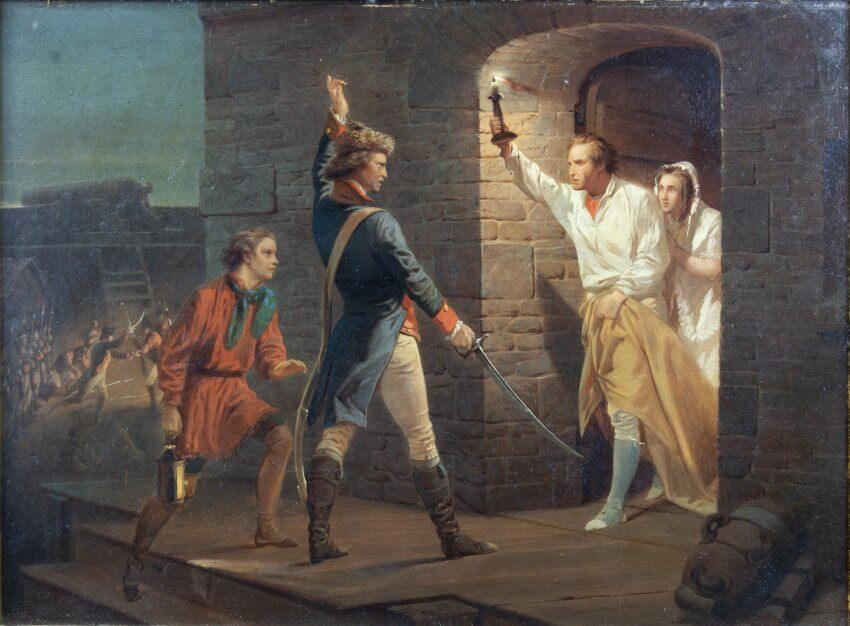
It did not go as planned. Montgomery led his men up the rocky path through the barricades. He was killed instantly by cannon fire from a blockhouse, as were several of his subordinates. Arnold received a serious leg wound from shots fired from the fortress walls. The attack failed, as ultimately did the attempt to add a fourteenth colony to the American experiment. The army remained encamped outside the walls throughout the winter until forced to retreat back to New York in May 1776 with the arrival of eight British regiments under Major General John Burgoyne. The campaign had ended but the fight for independence had just begun.

On January 19th, 1776, Albany paid their respects to the fallen General Richard Montgomery whom they had supported throughout the campaign:

Resolved that the Committee of this County Condole the Death of the Brave General Richard Montgomery, by wearing each a Crape round their Arm for six weeks from this day successively.

Sources:

Colonial Albany Social History Project, Stephan Bielinski, Welcome To The Colonial Albany Project Website

Colonel John Brown: His Services in the Revolutionary War, Rev Garret R.Roof, 1884, Internet Archive

Founders Online – Correspondence of Richard Montgomery, Philip Schuyler, and George Washington, Aug – Dec 1775, Founders Online: Home

David Wooster Kept the Men at Quebec: Giving Credit to a Much-Maligned General, Mark R. Anderson, Journal of the American Revolution, May 13,2021

Letters to Major General Philip Schuyler, New York Public Library online collection. Transcribed by Joseph Robertaccio, July 1775 – Jan 1776

Minutes of the Albany Committee of Correspondence 1775-1778, compiled by James Sullivan, State Historian, 1923

Proud Patriot: Philip Schuyler and the War for Independence, Don R. Gerlach, 1987

The Battle for the Fourteenth Colony, Mark R. Anderson, 2013

Keep America’s Turning Point Alive icon-star-red

Keep America’s Turning Point alive for generations to come by making a tax-deductible donation to the Campaign for Saratoga 250, Inc. Our certified 501c3 nonprofit organization is dedicated to promoting awareness, education, and preservation of critical assets of the Battles of Saratoga. Your support will help promote historical awareness of new generations of people across the region, nation, and globe.
Learn More

Continue reading

1775 Jessup's Landing

1775: The First Year of Revolution – The Loyalist’s Choice

Written by James Richmond

This is the sixth in a series of articles highlighting the 250th anniversary of the real beginning of the American Revolution in upstate New York, focusing on Albany County which, in 1775, stretched from Kingston north to Lake George.

1775 Jessups Landind

Abraham C. Cuyler 1742-1810


In mid-July 1775, just as the supporters of the American cause were being challenged by the Johnson family and their Iroquois allies (article 5), the Tryon County Committee of Safety identified another threat to the American resistance movement. The Mayor of Albany, Abraham Cuyler, “Being suspicious as a Tory against American Liberties” was traveling westward along the Mohawk River “perhaps carrying ammunition or other warlike stores.” The local committee searched his bateau, and finding no such articles of war “permitted him to pass on his journey”.

Abraham Culyer became Mayor of New York at the age of 28 in 1770, the third in his family to hold that position. His success was closely linked to the British establishment of Governor Tryon and Sir William Johnson. Therefore, one may not be surprised that he chose to remain loyal to the King.  What may be surprising is that he actively served on the patriot led Albany Committee of Correspondence throughout 1775 and into 1776, attending dozens of Committee meetings during that time, after being called out by the Tryon Committee.

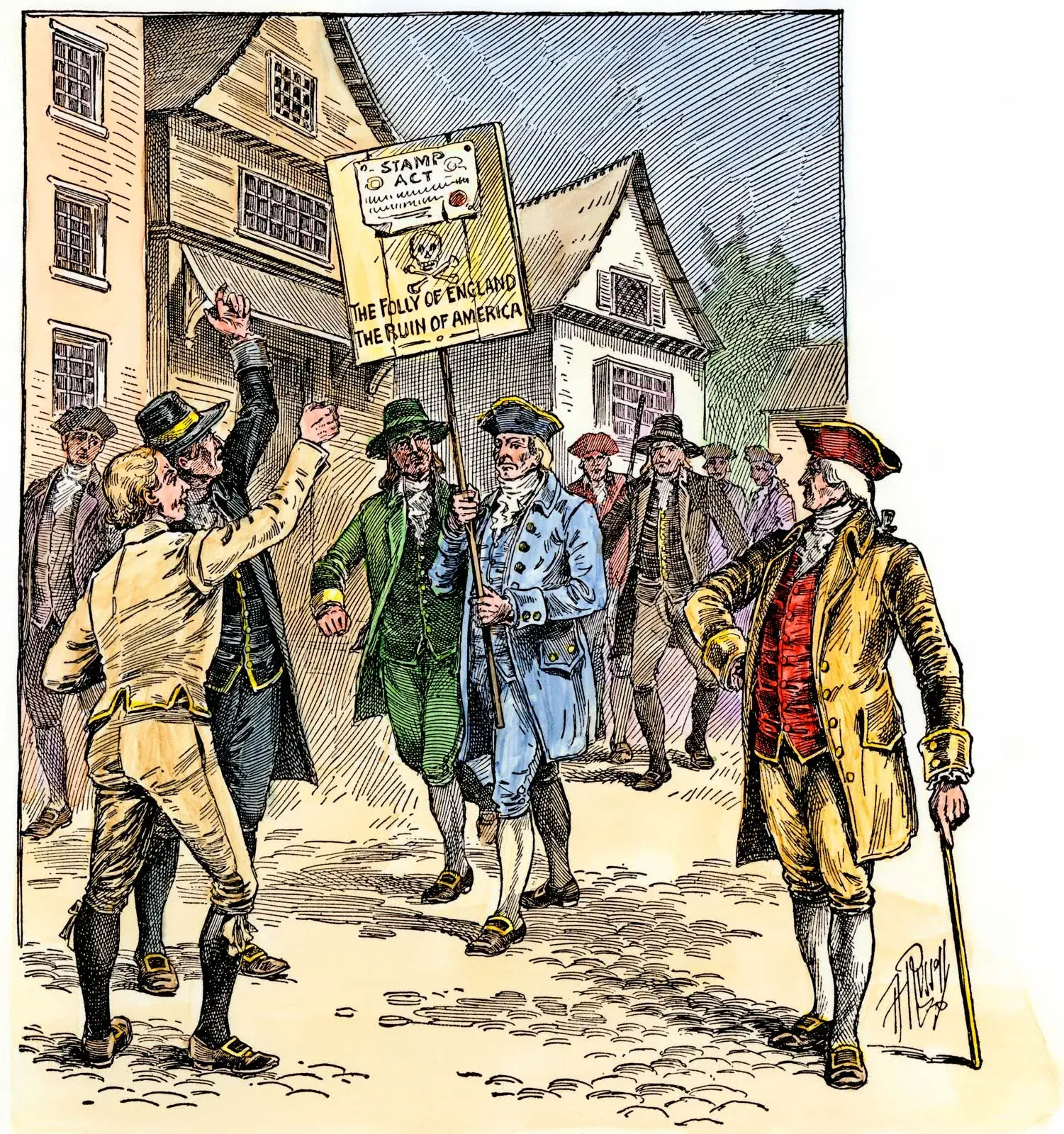
Culyer was not the only Loyalist who served on the Committee in 1775. Stephen De Lancey, the County Clerk and Surrogate Judge from the late 1760s, was elected to a position on the Committee in May 1775. He served until being labeled as “disaffected” after joining other Loyalists in a celebration of the King’s birthday at Cartwright’s Tavern in June 1776. He was among those deported to Hartford, Connecticut after that incident. Henry Van Schaack, native of Kinderhook and Albany Postmaster since 1757 first raised suspicions back in 1765 during the Stamp Act crisis when he was accused by the Sons of Liberty of applying for Stamp Tax Collector (article 2), served as a committee member from Kinderhook, a hotbed of opposition to the resistance.  In 1776 he would be arrested and sent to Connecticut. Peter W. Yates, an Albany Alderman was elected to the Committee but soon resigned after publishing an article questioning the actions of the movement. Although long suspected as opponents of the patriot cause, all four men were frequent attendees at Committee meetings until their loyalty to the British Crown became public knowledge.

One may ask why. One answer is that neither those who supported Revolution, nor those opposed to it, knew what the future would bring. Although it may be true that after Lexington and Concord and especially after Bunker Hill, further conflict was inevitable, Independence was not. In fact, many colonists in mid-1775 fully expected a reconciliation, either based on a compromise solution regarding colonial rights, or a quick overwhelming victory by British arms. 

A second, more subtle explanation, is that prior relationships of families, business and religion were difficult to sever in small communities such as the City of Albany and the surrounding Districts. This article will attempt to investigate both these aspects of the Loyalist choice.

The Loyalist position began to come into focus in the months after the First Continental Congress concluded its work in October 1774. At that Congress, delegate Joseph Galloway of Pennsylvania had offered a Plan of Union that would establish an American branch of the British Parliament as a response to the “No Taxation without Representation” rallying cry of the ardent patriots. The measure failed, setting the stage for the creation of the Continental Association which established the quasi-governmental structure under which the Albany Committee operated (article 2).

Others, who had their hopes dashed that the Congress would propose a peaceful reconciliation of the crisis, took up their pens in opposition. Writers focused on the fear of the unknown consequences of Congress’ actions.  Peter Van Schaack, a prominent lawyer from Kinderhook, voiced his antipathy to the choice forced on the people by the Congress.

I cannot see any principle of regard for my country which will authorize me in taking up arms, as absolute dependence or independence are two extremes which I would avoid; for should we succeed in the latter, we will still be in a sea of uncertainty and will have to fight among ourselves for that constitution we aim at.

Others were even more vociferous. Samual Seabury, an Anglican minister from Westchester County, offered rationale for his direct opposition to the formation and actions of the Congress in two pamphlets, Free Thoughts and The Congress Canvassed,  written to the merchants of New York City, on whom he lays the blame for supporting the Congress. Seabury warned of the potential for overreach by the Committees of Correspondance. 

Remember your liberties and properties are now at the mercy of a body of men unchecked, uncontrolled by the civil power. You have chosen your committee, you are no longer your own masters.

Seabury’s pamphlets captured the attention of Alexander Hamilton, future son-in Law of Phillip Schuyler, who replied in his own polemic, A Full Vindication of the Measures of Congress. 

Those who have studied the New York Loyalists in depth have identified several groups with relatively high support for the Loyalist cause. Often cited are Royally appointed officeholders, members of the Anglican church, proprietors of large estates, wealthy merchants and traders, and professionals – lawyers, physicians and ministers.  In general, members of the upper classes of New York society.  However, there were other dynamics at play. Possibly the most important consideration that cuts across all these categories was relationships – chiefly economic and family ties. New York Historian Alexander Flick, writing in the early 1900s, suggested another cohort of Loyalists that he labeled as the Conservative Masses who formed the great majority of the Loyalists who fought against the Americans. It is this alliance of the influential leaders and their followers that help explain the motivation of Loyalists in Albany County.

As political positions increasingly  crystallized during 1775, Albany County residents were encouraged to make their positions known. Often the catalyst for their decisions was the pressure from the Albany Committee to sign on to the Association, declaring support for the decisions of the Continental Congress.  On May 26 the Committee resolved that

Copies of the Association be lodged in the respective Wards of this City, to the intent that all such Persons, who have not yet subscribed to the Association may with greater Convenience do it, and it is hereby recommended to them to make their subscriptions by the first Day of June next after which time returns are to be made to the Committee of all such as decline it and similar mode is recommended to the Committees of the different Districts in the County.

This deadline was extended and often ignored, especially in the outlying districts. The countryside was slower to embrace the American cause than the city. For the most part they remained isolated from the effects of Parliament’s Coercive Acts that impacted residents in urban areas.  

It has been stated that “all Loyalism was local.”  That was clearly the case in Albany County and in the mid-Hudson Valley in general. While the city of about 3,000 residents overwhelmingly supported the American cause, the county-wide Loyalist population has been estimated at 20-25%, among the highest in New York.

Van Schaack House, Kinderhook

Van Schaack House, Kinderhook

Several Albany County districts were known to have significant Loyalist support. South of the city, Kinderhook was largely a freehold district with a desire to defend their land from the Patriot Dutch proprietors of the adjacent Livingston and Rensselaer Manors. The Committee engaged in a protracted dispute with the district committee over the legality of their local elections in the fall of 1775, claiming that some local citizens were prohibited from voting. Dirck Gardineer, a loyalist-leaning local committee member, submitted a petition signed by 270 men that the elections were conducted properly. The Albany Committee disagreed and called for new elections as the year ended.

Within the manors themselves, tenant farmers were long at odds with their Patroons. Discontent with their perpetual rents and insecurity of land tenure resulted in a significant agrarian revolt in 1766. Ten years later these tenants tended to look to the British for support in protecting their interests from the overreach of the Van Rensselaer and Livingston families, leaders in the resistance movement.

North of Albany, American support was strongest among the largely Dutch settlements along the Mohawk and Hudson Rivers, areas under the influence of Philip Schuyler, and the central section of the Ballston District recently settled by emigrants from New England. However, three strong Loyalist leaders succeeded in attracting supporters among the local population in the outlying areas of the Saratoga and Ballston Districts.  

To the west, Sir William Johnson shortly before his death had settled several hundred Scottish families in the Kingsborough Patent just north of Johnstown. Some also settled in the adjacent lands of the Kayaderosseras Patent in Albany County. Their heritage and allegiance to their benefactor influenced their choice in the conflict to come. One of those families was the Fraser brothers, William and Thomas, who settled near Ballston Lake. Their loyalty to the Johnsons and the Crown were to have significant consequences for their neighbors as the Revolution unfolded.

Jessup's Landing

Jessup’s Landing

To the north, another pair of brothers, land speculators Edward and Ebenezer Jessup, had   acquired large parcels of land in the foothills of the Adirondacks with the support of Governor Tryon and Johnson. They attracted settlers to work their lumbering and milling enterprises centered at Jessup’s Landing, later known as Corinth. Owing allegiance to the British establishment they actively supported the Loyalist cause and recruited from among these new arrivals. One of these was Thomas Loveless. By 1775 he had purchased 100 acres from the Jessups’ in Palmertown in the future town of Wilton, Saratoga County. He was to perform dangerous services for the British in the years to come.

In May 1774, retired British army Captain Daniel McAlpin purchased 900 acres on the west side of Saratoga Lake. He actively developed his property into a working farm which also became the headquarters for his recruitment of Loyalists to join him in resisting the Americans. The Albany Committee, aware of his activities, summoned him to join the Patriot cause in August 1775. He ignored their request for nine months.

At the end of 1775 these Loyalist-leaning residents of Albany County mentioned here were still going about their business, still well-respected members of their community, still hopeful that the long simmering dispute roiling the county and the other colonies would be resolved peacefully.  But they were also preparing for the alternative outcome.

Sources:

Agrarian Revolt in Colonial New York 1766, in The American Journal of Economics and Sociology, Vol. 1, No. 2, 1942, Irving Mark

American Migrations 1765-1799, Peter W. Coldham, 2002

Choosing Sides, in The Journal of American History, Vol 65. No 2, Sept 1978

I See Nothing But The Horrors of a Civil War, Alexander R. Cain, 2014

Loyalism in New York During the American Revolution, Alexander Flick, 1901

Minutes of the Albany Committee of Correspondence 1775-1778, compiled by James Sullivan, State Historian, 1923

Skullking for the King, J.Fraser, 1995

Suffering for the Crown: The Hudson Valley Loyalists, Kieran J. O”Keefe, 2021

The Congress Canvassed, Samuel Seabury, 1774

The Loyalists in Revolutionary America 1760-1781, Robert M Calhoon, 1965

The Minute Book of the Committee of Safety of Tryon County, 1905

Tory Spy, Daniel Lovelace, 2009

War on the Middleline, James E. Richmond, 2016

Welcome To The Colonial Albany Project Website Biographies, Colonial Albany Social History Project, Stefan Bielinski 

            Incivility in a Civil War, from the Other Revolutionaries, Stefan Bielinski  

Keep America’s Turning Point Alive icon-star-red

Keep America’s Turning Point alive for generations to come by making a tax-deductible donation to the Campaign for Saratoga 250, Inc. Our certified 501c3 nonprofit organization is dedicated to promoting awareness, education, and preservation of critical assets of the Battles of Saratoga. Your support will help promote historical awareness of new generations of people across the region, nation, and globe.
Learn More

Continue reading

1775 - Johnson Hall -Iroquois 1772

1775: The First Year of Revolution – The Iroquois Dilemma

Written by James Richmond

This is the fifth in a series of articles highlighting the 250th anniversary of the real beginning of the American Revolution in upstate New York, focusing on Albany County which, in 1775, stretched from Kingston north to Lake George

Iroquois conference at Johnson Hall

Iroquois conference at Johnson Hall


Philip Schuyler, just appointed by the Continental Congress as the Major General of the Northern Department, arrived in Albany on July 2, 1775, intent on quickly proceeding to Fort Ticonderoga. Having finally received the approval to move ahead with an invasion of Canada to secure their allegiance to the American cause as the Fourteenth Colony, the General had much to accomplish with inadequate resources.

So it was with a sense of frustration that he wrote to the Continental Congress on July 15 from his country home at Saratoga:

The information contained in the [enclosed] letter is so truly alarming that although I should have been at Ticonderoga tomorrow, I think it is advisable to remain a day here, in which I may probably receive some further accounts that will determine whether my presence may not be more necessary in Tryon County than at Ticonderoga. 

The enclosed letter from the Tryon County Committee of Safety was the cause of his consternation. That letter from the patriot leaders in the newly formed county just west of Albany, informed the Albany Committee that upwards of 900 Iroquois warriors were poised to “fall on the American inhabitants below the Little Falls.”  With little means to resist such an invasion, the Mohawk Valley Patriots looked to the Albany committee and Schuyler “to save this County from Slaughter and Desolation.”

So why had the Iroquois (Haudenosaunee) Confederacy taken the side of the British so early in the Revolution?  The short answer is that they had not. This rumor that had caused so much fear in the valley was a false alarm.  Schuyler was able to proceed on his way to Ticonderoga with little interruption.

However, to understand the positions of the multiple participants in this dispute, it is necessary to go back almost exactly one year to July 11, 1774. It was on that date that Sir William Johnson suffered a stroke and died at Johnson Hall while hosting a council with representatives of the Iroquois nations, one of many he had led dealing with land disputes during his twenty years as Indian Commissioner. 

During that time, he forged an alliance and strong bond with his Native American neighbors, addressing their needs and concerns, even becoming one of them through his relationship will Molly Brandt. Perhaps his most important contribution was the 1768 Treaty of Fort Stanwix meant to guarantee Iroquois possession of the land west of the Proclamation Line of 1763. It was white settler encroachment beyond this treaty line that was the subject of his final conference.

In failing health, he had appointed his nephew Guy Johnson as his successor earlier in 1774. Although well respected in his own right, he was not Sir William. To complicate the transition, in the years leading up to the Revolution cracks began to appear within the Confederacy and in their relationship with their European neighbors. 

Image of Guy Johnson

Image of Guy Johnson

The Iroquois may have been known as one confederacy, but they consisted of six nations each with their own history, responsibilities and experiences. The Mohawks, who guarded the eastern door were most exposed to the settlers moving into their region. In addition to their close relationship with the Johnson family, they were also engaged in long-term disputes over land grants impinging on their territory. The most consequential of these controversies involved the Kayaderosseras Patent, which was finally resolved in 1768 with the release and partitioning for settlement of over 400,000 acres of Mohawk land in the northern section of Albany County, which would later become Saratoga County. There were other examples of frictions between the tribe and colonial leaders, including the fraudulent land claims made by the Dutch controlled Albany city government. They had previously claimed 1,000 acres surrounding the “Lower Castle” at Fort Hunter only to be overruled by the royal colonial governor William Crosby.

Interestingly, religion also played a role in the Iroquois – Settler interactions. Jesuit missionaries had attempted to convert some Iroquois groups with varying levels of success in the seventeenth century. The Mohawk nation had been strongly influenced by Anglican missionaries since the eighteenth century. Most influential in the years prior to the American Revolution may have been the ministry of Samuel Kirkland to the Oneidas, the nation just west of the Mohawk land. A “new light” minister from Connecticut, his message and concern for his followers influenced both the Oneidas and the nearby Tuscarora nation to look favorably upon the Americans in the looming conflict. 

Another aspect of the Iroquois response to the pending storm was the interplay between the three internal power centers within the Confederacy. A matriarchal society, women played an important role in the decisions of the nations, significantly influencing the actions of the warriors and sachems. These tribal chiefs were typically chosen by the clan mothers and usually counseled restraint as conflicts arose.

In the years leading up to the American Revolution, the power of the Confederacy was on the decline.  Previously, the Iroquois ability to control their own destiny hinged on the century long conflict between the British and French empires. By deftly positioning themselves as “aggressive neutrals” – favoring first one side and then the other – the Iroquois were moderately successful in achieving their primary goal, which was to protect their land from encroachment by the growing numbers of white settlers. With the defeat of the French in the Seven Years War, preserving their autonomy became much more difficult. The advent of the Revolution provided an opportunity for the Iroquois to regain their leverage by again appealing to both sides in a new conflict.

This background gives some context to the events as they unfolded between the European contestants in 1775 and the role played by the Iroquois.

As tensions continued to rise after the opening of hostilities at Lexington and Concord, Guy Johnson took actions to secure the loyalty of the Iroquois to the British crown. From Boston, General Thomas Gage exhorted Johnson to remove the threat posed by the Congregationalist missionaries. In May, Johnson prevented Kirkland from returning to the Oneidas, essentially placing him under house arrest for a time. The Albany Committee, aware of Johnson’s increasing hostility to the American cause warned him in a letter that 

These Proceedings will if not speedily stopped, raise the resentment of the People we fear, and cause them to undertake such Acts as will not be in the Power of any Authority to restrain.   

Guy Johnson ignored the Committee’s threat, but prudently called the Iroquois to a conference at Oswego, out of reach of the revolutionaries.  In a confab attended by 1,500 men, women and children from several Iroquois nations, he claimed they agreed to “assist his Majesty’s troops in their operations.”  Then he, accompanied by 220 Iroquois – most notably Joseph Brant, whose sister Molly was the widowed consort of Sir William – took passage to Montreal in July, temporarily leaving the field to others.  Their journey continued to England where they were welcomed and encouraged to return to New York to continue their resistance to the American cause, which they did in July 1776.

However, Guy Johnson’s departure did not resolve the Iroquois dilemma. Most were still solidly positioned on the fence in this conflict. While General Schuyler was now free to concentrate on his preparations for the invasion of Canada, he realized that the unresolved Iroquois situation needed to be addressed. Unlike Johnson, he did not pressure them to take sides, but rather to remain neutral. In this effort, he had an unusual ally – a Mohawk chief.

Schuyler arranged for a conference with the Iroquois which was held in late August 1775 at the Albany Dutch church, mostly attended by representatives of the Oneida and Mohawk nations. Representing the Americans were four commissioners appointed by the Continental Congress including Schuyler and Volkert Douw, former mayor of Albany. The commissioners assured them that the Americans had no nefarious intentions and would support the continued presence of Christian missionaries among them. 

The principal speaker for the Iroquois was Little Abraham, a Mohawk Pine Tree Chief appointed for his leadership skills. He was not pleased with the Commissioners refusal to accept responsibility for resolving land disputes with the Mohawks, a sticking point that would later prove injurious to the American cause. However, Little Abraham believed that the future of both his Mohawk nation and the Confederation hinged on avoiding taking sides in the conflict as long as possible. The Indian Commissioners and the Albany Committee were pleased with his response:

This then, is the determinations of the Six Nations. Not to take any part, but, as it is a family affair, to sit still and see you fight it out…for we bear as much affection for the King of England’s subjects upon the other side of the water, as we do for you, born upon this island.

General Schuyler had achieved his immediate goal to keep the Iroquois out of the war.  But the contest of wills was not over. Although Guy Johnson had left the scene, William’s son, Sir John Johnson remained a threat in the valley. However, that is a 1776 story.

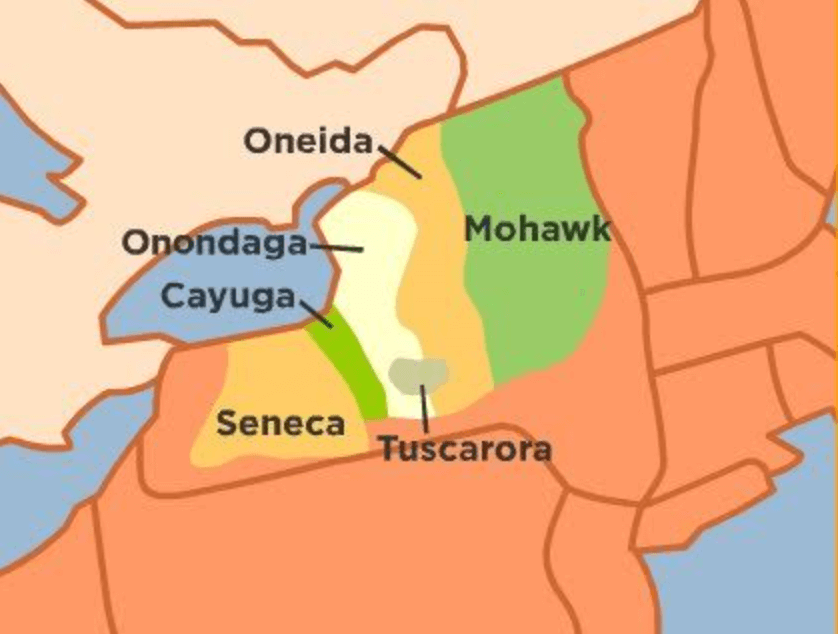
1775 - Iroquois nations map

Map of Iroquois Nations

Sources:

American Archives Series 4 and 5, Peter Force, Northern Illinois Digital Collection

Iroquois Diplomacy on the Early American Frontier, Timothy J. Shannon, 2008

Journals of the Provincial Congress of New York 1775-1777. Google books

Journals of the Continental Congress, Library of Congress, 1775

Minutes of the Albany Committee of Correspondence 1775-1778, compiled by James Sullivan, State Historian, 1923

Suspected on Both Sides – Little Abraham, Iroquois Neutrality and the American Revolution, Caitlin A. Firtz, 2008

The Iroquois in the American Revolution, Barbara Graymont, 1972

The Minute Book of the Committee of Safety of Tryon County, 1905

Thomas Gage Papers vol 127, University of Michigan Library Digital Collection

Keep America’s Turning Point Alive icon-star-red

Keep America’s Turning Point alive for generations to come by making a tax-deductible donation to the Campaign for Saratoga 250, Inc. Our certified 501c3 nonprofit organization is dedicated to promoting awareness, education, and preservation of critical assets of the Battles of Saratoga. Your support will help promote historical awareness of new generations of people across the region, nation, and globe.

Learn More

Continue reading

1775 - Ft Ticonderoga SS

1775: The First Year of Revolution – No Turning Back

1775: The First Year of Revolution – No Turning Back

Written by James Richmond

This is the fourth in a series of articles highlighting the 250th anniversary of the real beginning of the American Revolution in upstate New York and specifically Albany County, which in 1775 stretched from Kingston north to Lake George.

1775 - Ft Ticonderoga SS

Pictured: Ft Ticonderoga, May 10, 1775


May 10,1775 was indeed a pivotal day for the Patriot cause in Albany County. As previously mentioned, on that date many influential citizens asserted their public support for the American cause by stepping forward to form district committees throughout the county in response to the outbreak of hostilities at Lexington and Concord three weeks previously. Almost a year of increasing concern about events unfolding in Massachusetts and throughout the colonies, burning embers had finally burst into flames. A growing number of Albany residents were now convinced that there was no turning back.

However, it was another event on May 10th that made the impending conflict real…and confusing.  In a small action with large consequences, Albany patriots became embroiled in the fog of war. The capture of Fort Ticonderoga and it’s all important artillery changed the lives of many. In an inadvertent and largely haphazard action, two now well-known patriots met for the first time and forged an unplanned alliance.  Unknown to each other, Ethan Allen and Benedict Arnold had each received instructions from Connecticut and Massachusetts respectively, to conduct a raid on a British held fort in another colony, without the prior knowledge of that colony. What could go wrong? Fortunately, the capture was bloodless, as was the capture of the small garrison at Crown Point the next day. However, it was to be the first step in the first campaign of the American Revolution that would not end well.

Ethan Allen in his report to the Albany Committee written the next day summarized the action in one long run-on sentence:

Col. Arnold entered the fortress with me side by side the guard was so surprised that contrary to our expectation did not fire on us but fled with precipitancy we immediately entered the fortress and took the garrison prisoners without bloodshed or any opposition they consisted of one Captain and a lieutenant and forty two man little more need to be said

But there was more to be said:  

I expect immediate assistance from you both in men and provisions you cannot exert yourselves too much in so glorious a cause the number of men need to be more at first till the other colonies can have time to muster…

So now, what to do?  The Albany Committee punted. Responding a few days later, after consulting with their New York City Committee brethren, they told Arnold their powers “are too limited to permit either body to take an active step in the matters proposed before we have the opinion of the Provincial or Continental Congress.” Two steps forward, one back.

The Continental Congress in Philadelphia took little time to respond. Concerned about a British counterattack from Canada, they authorized the Albany Committee to supply “an additional body of forces as will be sufficient to establish a strong post.” Calls for men immediately went out to recently organized Albany Districts and two companies were formed and sent to Ticonderoga.  In addition, the Patriot Governor of Connecticut, John Trumbull, agreed to send 1000 militiamen under the command of Col. Benjamin Hinman. Americans were prepared to respond to the British threat by marching off to war. That was the easy part.

The Provincial Congress, “convinced that persons in the vicinity of Albany would be most proper to put the plan in execution” appointed five members of the Albany Committee, including three men from the Saratoga District, George Palmer, Dirk Swart, and Peter Lansingh, to head up the response. Their orders hinted at some of the issues facing the Americans in their attempt to hold onto the forts along Lake Champlain. They were instructed to “cultivate harmony between the New England troops and others…not to countenance any persons to make any incursions into Canada… [and] procure provisions [food and clothing] and materials [weapons and ammunition] necessary to fulfill the design the Congress has in view.” 

In the meantime, the joint leadership of Ethan Allen and Benedict Arnold was not working out very well. Allen, impetuous and unfamiliar with the logistics of campaigns, attempted to capture Saint-Jean across the border in Canada and was repulsed by British reinforcements sent south from Montreal after the fall of Fort Ticonderoga. Arnold, with superior organizational and tactical skills, was not pleased with Allen’s decisions. With the arrival of Colonel Hinman who took command, Allen returned to Vermont and Arnold, not willing to serve under Hinman, went home to Connecticut. 

Providing supplies and ammunition to these men proved an even more difficult task than disputes over leadership of the gathering militia. Fortunately, the Albany Committee was able to obtain the services of a prominent member of the community experienced in the logistics of war.

Phillip Schuyler was the most prominent member of one of the wealthiest Dutch Albany families. Their estate grew over generations as a result of success in the fur trade, real estate – Schuyler owned extensive property at Saratoga which included farmland, mills and a country house – and intermarriage with other elite families. As a young man during the French and Indian War Schuyler used his connections to procure military supplies for the British Army that would propel him into a prominent role in the American Revolution. As a member of New York’s General Assembly, he became a leader in opposition to British overreach and readily joined the Patriot cause as war approached. 

In May 1775 Schuyler was one of twelve New Yorkers appointed to serve in the Second Continental Congress in Philadelphia. On June 15 he was commissioned as one of four major generals of the Continental Army one day after George Washington was appointed Commander in Chief.  Within days Schuyler and Washington, accompanied by Major General Charles Lee and Brigadier General Horatio Gates, left for New York City.

Arriving on June 25th to festivities and welcoming speeches, the party received a dispatch from Massachusetts bringing news of the bloody Battle of Bunker Hill which resulted in a British “victory” at the expense of 226 British soldiers. The defending Americans lost 138 soldiers and over 300 were wounded. The first conventional battle of the long war propelled Washington to leave immediately for Cambridge to assume command of his battered troops. A few days later Schuyler boarded a sloop and proceeded north to Albany, arriving on July 9. He had his work cut out for him.

Waiting for him in Albany was a late-night letter written by Dr. Samuel Stringer, who had assumed leadership of the Albany Committee when Abraham Yates was appointed to the Provincial Congress six weeks earlier. After congratulating Schuyler on his appointment, Stringer turned to the challenges before him.

I’m afraid that the posts above [Ticonderoga and Crown Point] are in a bad situation for provisions, especially flour which the commissary told me has a supply of only eight days. Your presence is greatly needed here and unless you arrive soon expect you will find the business altogether in greater confusion than you can conceive.

Stringer was correct, as Schuyler soon found out for himself. Upon arriving at Ft. Ticonderoga a few days later he described what he found in a letter to General Washington, stating that “Not one earthly thing for offense or defense has been done. The Commanding officer [Benjamin Hinman] had no orders.”  Hinman had arrived on June 17 with 1,400 Connecticut troops but was unable to deal with the shortage of provisions and the unmanageable troops, writing to Schuyler that “I wait with impatience for your arrival as I find myself very unable to stere in this stormy cituation.”

Schuyler prepared to address the many issues confronting him north of Albany. However, first he was required to deal with unrest to the West. British Loyalists and their Iroquois allies were threating to stand up for the Crown in defiance of the American Rebels.

  • Schuyler Mansion in Albany ca 1775

    Schuyler Mansion in Albany ca 1775
  •  Major General Philip Schuyler

    Major General Philip Schuyler

Sources:

Albany County, Stephan Bielinski in The Other New York, 2005 Colonial Albany Social History Project, Stefan Bielinski, Extensive website of Albany Colonial History and Biographies Welcome To The Colonial Albany Project  Website 

Founders Online, National Archives, George Washington correspondence 

Journals of the Provincial Congress of New York 1775-1777. Google books

Journals of the Continental Congress, Library of Congress, 1775

Minutes of the Albany Committee of Correspondence 1775-1778, compiled by James Sullivan, State Historian, 1923

Papers of Philip Schuyler, New York Public Library Digital Collections

Proud Patriot: Philip Schuyler and the War of Independence 1175-1786, Don R. Gerlach, 1987

The American Revolution in New York, Alexander Flick,1926

The British are Coming, Vol 1 of the Revolutionary Trilogy, Rick Atkinson, 2019

Keep America’s Turning Point Alive icon-star-red

Keep America’s Turning Point alive for generations to come by making a tax-deductible donation to the Campaign for Saratoga 250, Inc. Our certified 501c3 nonprofit organization is dedicated to promoting awareness, education, and preservation of critical assets of the Battles of Saratoga. Your support will help promote historical awareness of new generations of people across the region, nation, and globe.

Learn More

Continue reading

Albany City Hall ca 1775

1775: The First Year of Revolution – Leadership

1775: The First Year of Revolution – Leadership

Written by James Richmond

This is the third in a series of articles highlighting the 250th anniversary of the real beginning of the American Revolution in upstate New York and specifically Albany County, which in 1775 stretched from Kingston north to Lake George.

Albany City Hall ca 1775

Pictured: Albany City Hall ca 1775


When the Albany Committee of Correspondence met officially for the first time on January 24, 1775 in support of the Continental Congress’ measures against the Coercive Acts of the British Parliament, two often overlooked aspects of the formation of that committee began to emerge.

First, this committee was decidedly extra-legal.   Governmental authority was vested in the City’s Common Council established under a municipal charter issued by Governor Thomas Dongan almost 90 years earlier. The mayor, recorder, sheriff and the clerk were appointed by the governor of the colony. Aldermen were elected annually, most often from among the prominent Dutch families of the City.

The Committee of Correspondence had no standing to take actions that could be deemed traitorous. They were treading on dangerous ground. Early meetings were held in inns and private homes. The first gathering was held at the tavern of Richard Cartwright who ironically would later be outed as a Loyalist and banished from Albany.  Only when the outbreak of war tipped the power balance from the City Council to the Committee where they emboldened to meet at City Hall.

Secondly, the native language of most of those assembled was Dutch and their conversations may have reflected their ethnic origin. The initial patriot leadership in the City of Albany and much of the surrounding county was culturally distinct from the New Englanders who were at the point of the spear of the rebellion. The American Revolution was not just a revolt of Puritan merchants and farmers joining with Virginian aristocrats to achieve independence. The real history of the Revolution is much more granular and complex. Albany County’s unique ethnic mix would have an impact on local events throughout the war.

So who led these Albany patriots? One of the first acts of the Committee was to appoint a chairman. They unanimously selected Abraham Yates, Jr.  Yates had risen from a working-class family of mixed heritage to become a lawyer and Albany County Sherrif during the French and Indian War. His experience dealing with the British military made him an early advocate for the rights of citizens and propelled him into politics, where he served on the Common Council for 20 years. Yates came an outspoken opponent of British actions, from the 1765 Stamp Act to the recent 1774 Coercive Acts. He was the obvious choice to lead the Albany Patriots as his later career confirmed. After serving 4 months leading the Albany Committee, he was chosen to serve on the New York Provincial Congress and was instrumental in drafting the State Constitution in 1777. Yates later served as State Senator and ended his career as Mayor of Albany from 1790 to his death in 1796.

One of the first actions of the January meeting was to approve the November resolves of the “former” Committee, which apparently had met in secret to implement the decisions of the First Continental Congress. By January this new committee was becoming bolder but still unsure of the extent of its authority. Consumed with their own affairs, outlying districts were slow to form their own committees as directed by the leadership, and few men outside of Albany attended the early County Committee’s sessions.

Five weeks after that first meeting the Committee received a letter from Assemblyman Phillip Schuyler indicating that the British controlled Colonial Assembly would not consider appointing delegates to the upcoming 2nd Continental Congress planning to convene in  Philadelphia,  and he urged the Committee to take the initiative. While supportive of the request, the committee was not willing to proceed on their own authority without the support of their District Committees. These outlying districts were called to Albany on March 21 but only a few responded, including – for the first time – representatives from Halfmoon and Saratoga. They appointed five members to the New York Provincial Congress, to select the delegates to the Continental Congress. The local supporters of Independence recognized that it was important to work closely with both local citizens and Colony-wide leaders for the movement to succeed. That effort was off to a slow start.

Events in the next few weeks gave the Committee a new perspective of the scope and urgency of their responsibilities and awakened the broader population to the reality of the coming conflict. On April 26th the Committee received word of the raid on Lexington and Concord and immediately reached out to the delinquent districts informing them that

The late troubles in the Massachusetts Bay, renders a meeting of the Committee of Correspondence necessary, which is appointed to be held at the House of Richard Cartwright on Wednesday the 10th day of May next, and as your District have not lately associated by Committees we conceive this step necessary.

The actual outbreak of the war galvanized support for the Patriot cause. At the May 10 meeting committee members attended representing Rensselaer Manor, Livingston Manor, Schenectady, Saratoga, Halfmoon, Schagtekoeke, Hoosic, Cambridge, Bennington and several other districts. In all 110 men became District Committeemen that day, officially joining the American cause.

They joined a strong and growing Albany City Committee well stocked with prominent citizens with leadership skills. Included were a previous mayor (Volkert P. Douw), the current Mayor (Abraham Cuyler) and two future Mayors (Abraham Ten Broeck and Abraham Yates). Several others went on to serve in the New York Provincial Congress, the Continental Congress and one, Robert Yates, would be a delegate to the Constitutional Convention in 1787.

The Albany County Committee’s abilities would soon be tested. On the same day this assemblage of patriots gathered at Albany City Hall, 100 miles to the north two New Englanders, Green Mountain Boys leader Ethan Allen and Colonel Benedict Arnold, a merchant-mariner from Connecticut, captured the British fortress at Ticonderoga.  But could they keep it?

  • Abraham Yatres, Jr

    Abraham Yatres, Jr
  • Albany County Districts, 1772-1784

    Albany County Districts, 1772-1784

Sources:            

Collections of the History of Albany Vol  1,  J. Munsell 1865

 Colonial Albany Social History Project, Stefan Bielinski, Extensive website of Albany Colonial History and Biographies      Welcome To The Colonial Albany Project Website

Minutes of the Albany Committee of Correspondence 1775-1778, compiled by James Sullivan, State Historian, 1923                                                                                                                                          
Revolutionary Albany: Organizing the Committee of Safety, Protection and Correspondence, Peter Hess, in New York Almanack, February 14, 2022                       

Keep America’s Turning Point Alive icon-star-red

Keep America’s Turning Point alive for generations to come by making a tax-deductible donation to the Campaign for Saratoga 250, Inc. Our certified 501c3 nonprofit organization is dedicated to promoting awareness, education, and preservation of critical assets of the Battles of Saratoga. Your support will help promote historical awareness of new generations of people across the region, nation, and globe.
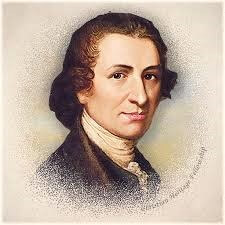
Learn More

Continue reading

Albany street 1775

1775: The First Year of Revolution – Albany Steps Up

1775: The First Year of Revolution – Albany Steps Up

Written by James Richmond

This is the second in a series of articles highlighting the 250th anniversary of the real beginning of the American Revolution in upstate New York and specifically Albany County, which in 1775 stretched from Kingston north to Lake George.

Albany street 1775

Pictured: Albany Street, 1775.


The 56 Delegates to the First Continental Congress returned from Philadelphia to their home communities in November 1774, intent on taking the steps necessary to pressure the British Government to rescind the Intolerable Acts by imposing restrictions on trade between the American Colonies and the homeland. The principal mechanism to accomplish this goal was implementation of the Continental Association through the establishment of committees at the local level.

The speed at which this structure was put in place varied by colony and even by counties, districts, and towns.  Colonies who had led the resistance to increasing British overreach during the previous decade were first to step up.  New England and Virginia established their committees in November and December 1774. 

New York was a Colony of divided loyalties in 1775. Economic ties between the city merchants and maritime interests, and their British based trading partners fueled strong support for the status quo. It was not until April 1775 that the colony’s newly formed Provisional Congress endorsed the Continental Association. Even with that, only three of New York’s thirteen counties displayed any enthusiasm for the approaching confrontation with their British parent – Suffolk, Ulster…and Albany.

Albany’s support of the Patriot cause was influenced by its history.  Although an important upstate city in the British colony for the previous 100 years, the power centers were still dominated by wealthy Dutch families. This influence, sometimes referred to by historians as the “Albany Spirit” fractured relationships between the  Dutch and English along ethnic, economic and political fault lines. Disputes arose over control of the fur trade with the French Canadians and trade with the Iroquois Nation during the epic seventy-year conflict for control of North America between the French and British empires

In the years leading up to the Revolution that friction had only gotten worse. The outcome of the French and Indian war had destroyed the often-extralegal Dutch trading arrangements with the French. In addition, for decades Dutch merchants and Indian Commissioners, had controlled trade with the Iroquois. This monopoly had come to an end at the beginning of the last war, with the appointment of William Johnson as Indian Agent, based on his strong influence among the Mohawk River tribes. One final insult was the quartering of British troops in Albany barracks and homes during the war.

  • Albany Map 1790 c. DeWitt

    Albany Map 1790 c. DeWitt
  • Stamp Act

    Stamp Act

This all came to a head with the Stamp Act crisis in 1765. Fueled by a long-term animosity toward British authority, 94 overwhelmingly Dutch men subscribed to the Constitution of the Sons of Liberty of Albany which resolved “to persevere to the last in the vindication of our dear bought Rights and Privileges, the very Essentials of our peerless constitution.” Following the script of Sons of Liberty organizations in other cities throughout the colonies, they pressured Albany Postmaster Henry Van Schaak to deny that he had applied for the position of Stamp Distributor. 

Subsequently, Albanians staged several mob actions designed to force British troops still stationed in Albany to be removed and in 1767 General Thomas Gage ordered the army to leave the city.  Welcoming that decision, city residents turned their attention to events happening elsewhere in the colonies, watching with trepidation events in Massachusetts and Philadelphia during 1774, as described in our previous article.

So it was that, in response to the Continental Association, on January 24, 1775, eleven prominent Albany Dutchmen gathered in Richard Cartwright’s Inn, meeting as the Committee of Correspondence and approved Resolves supporting the actions of the First Continental Congress. 

The eleven men all had residences in the City of Albany, but they understood their charter was to represent the entire county, the largest, most populous and diverse county in the colony of New York. To the south, in the Hudson River valley the Livingston and Rensselaer patroonships operated as fiefdoms reminiscent of medieval manors of landed aristocracy. To the west, along the Mohawk River as far as Schenectady and to the north, along the Hudson River to Saratoga, Dutch settlers prevailed. Some owned small farms, others such as Phillip Schuyler owned extensive settlements, often referred to as plantations. Tenant farmers and enslaved Blacks provided much of the       labor to operate these estates.

However, two events occurred after the recent war with the French that contributed to important changes in the settlement of the County. First, the campaigns of that war had seen thousands of men from New England move though the county in 1755-1759 on their way to battles at Ft. Ticonderoga, Crown Point, Montreal and Quebec City. Exposed to this thinly settled land, these men saw an opportunity to move west from their land starved family enclaves in Massachusetts and Connecticut. 

The second post-war event made that migration possible. In 1768 an agreement was reached with the Iroquois Mohawks which resulted in 406,000 acres of land known as the Kayadersosseras Patent north and west of Albany to be partitioned and opened for settlement. New Englanders began moving west, largely bringing their political views opposing British rule along with them.

How this combination of established families and new arrivals worked together to respond to the opening acts of the American Revolution will be discussed in our next article.

Colonial Albany in the American Revolution. Albany River view 1763.

Albany River view 1763

Sources:

A Factious People: Politics and Society in Colonial New York,  Patricia Bonomi, 1971           A People in Revolution: The American Revolution and Political Society in New York, 1760-1790 Edward Countryman, 1981             Colonial Albany Social History Project, Stefan Bielinski,Historian. Extensive website of Albany Colonial History and Biographies      Welcome To The Colonial Albany Project Website Revolutionary Albany: Organizing The Committee of Safety, Protection and Correspondence, Peter Hess, in New York Almanack, February 14, 2022       The Albany Stamp Act Riots, Beverly McAnear, The William and Mary Quarterly, October 1947 The American Revolution Comes to Albany, 1756-1776, Elizabeth Covart, in The Journal of the American Revolution, August 4, 2014       The People of Albany: The Frist 200 Years, Peter Hess, 2009

Keep America’s Turning Point Alive icon-star-red

Keep America’s Turning Point alive for generations to come by making a tax-deductible donation to the Campaign for Saratoga 250, Inc. Our certified 501c3 nonprofit organization is dedicated to promoting awareness, education, and preservation of critical assets of the Battles of Saratoga. Your support will help promote historical awareness of new generations of people across the region, nation, and globe.
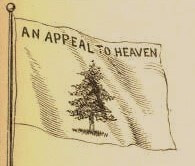
Learn More

Continue reading

1775 - continental-congress

1775: The First Year of Revolution – Prelude

1775: The First Year of Revolution – Prelude

Written by James Richmond

This is the first in a series of articles highlighting the 250th anniversary of the real beginning of the American Revolution. It was during 1775 that the tide of public sentiment turned toward the inevitability of Independence. This article provides the background for the transition of most colonists from considering themselves British subjects to citizens of a new nation during 1775. Future monthly articles will focus on how that transition occurred in upstate New York and specifically in Albany County, which in 1775 stretched from Kingston north to Lake George. 

1775 - continental-congress

Pictured: Continental Congress.


Revolutions do not happen overnight. The storming of the Bastille in 1789 did not cause the French Revolution. The fall of Ft. Sumter in 1861 did not cause the American Civil War. So too, the Declaration of Independence proclaimed on July 4, 1776, did not ignite the American Revolution. It simply ratified a Revolution already happening in the countryside, towns and cities throughout the colonies.

Historians offer varying opinions on when the drive for Independence began and when it became inevitable. Many authors have chosen to begin the story with the Stamp Act crisis in 1765, remembering the rallying cry of the opponents of the Act: “No Taxation without Representation.” From there the narrative builds as events unfolded over the next decade: The Townshend Acts of 1767, The Boston “Massacre” in March 1770, followed by the Boston Tea Party in December 1773, and the Coercive Acts imposed by an irate British Parlement during 1774.

But the question remains – when did independence become inevitable?  This article proposes that the point of no return was initiated on October 20, 1774.

The Coercive Acts, called the “Intolerable Acts” in the colonies, systematically targeted different segments of Massachusetts society, the effective result being an overwhelming surge of resistance and growing support for independence. The Boston Port Bill prohibited trade through Boston Harbor, affecting merchants, shipping interests and consumers. The Administration of Justice Act stripped the Colony of the right to pursue legal action against Crown officials. The Massachusetts Government Act effectively annulled the colonies charter, an almost sacred document upon which the citizens relied on to make local governmental decisions. The Quebec Act expanded Canada’s boundaries south to the Ohio River, extinguishing the western claims of not only Massachusetts, but also Connecticut and Virginia. The act also restored the legitimacy of the Catholic Church, anathema to the protestant separatists who had founded the New England colonies in the early 1600s. Taken together, these laws alarmed not only Massachusetts, but other colonies fearful that similar restrictions would be placed on them.

As reaction grew after each new law arrived from England during the first six months of 1774, the colonies responded with a concerted effort to address these perceived injustices. Communication up and down the coastal colonial cities crystalized a desire to address the problem through collective action. On September 17 fifty-six delegates from twelve of the thirteen colonies (Georgia was not represented) arrived in Philadelphia to forge a response.

  • 1775 - Albany County Map

    Albany County Map
  • 1775 - Articles_of_Association,_page_3

    Articles of Association

The delegates of this First Contentental Congress were not all of one mind. Some pushed for independence, others sought reconciliation by appealing directly to King George to overturn the parliamentary actions. To asswage the conflicting views of the delegates the Congress did issue a Petition to the King, but also produced the Continental Association, a 14-point document that took several steps that moved the colonies closer to independence.

The Association, signed on October 20 by 53 of the 56 delegates, laid out specific steps to redress their grievances, including Non-Importation, Non-Consumption and Non-Exportation agreements. But perhaps the most important clause was the eleventh which in effect authorized the formation of a shadow governmental structure to seek compliance with the decisions of the Congress. It prescribed that “a Committee be chosen in every County City and Town…whose business it shall be to identify any person within the limits of their appointment who has violated this Association.” This was an open-ended invitation to supplant the existing rule of law as administered by British authorities.

Over the next several months these committees were formed throughout the colonies. It is estimated that 7,000 community leaders participated in these organizations and began the process of implementing the decisions of the First Continental Congress. In our next article we will explore the formation and early activities of the Albany County Committee of Correspondence and its impact on the lives of local residents. 

Sources:

Continental Association https://founders.archives.gov/documents/Jefferson/
1774: The Long Year of Revolution, Mary Beth Norton, 2020
           
1775: A Good Year for Revolution, Kevin Phillips, 2013
The People of Colonial Albany
https://exhibitions.nysm.nysed.gov/albany/whoarewe.html
Minutes of the Albany Committee of Correspondence 1775-1778, Vol 1, James Sullivan, 1923;

Keep America’s Turning Point Alive icon-star-red

Keep America’s Turning Point alive for generations to come by making a tax-deductible donation to the Campaign for Saratoga 250, Inc. Our certified 501c3 nonprofit organization is dedicated to promoting awareness, education, and preservation of critical assets of the Battles of Saratoga. Your support will help promote historical awareness of new generations of people across the region, nation, and globe.
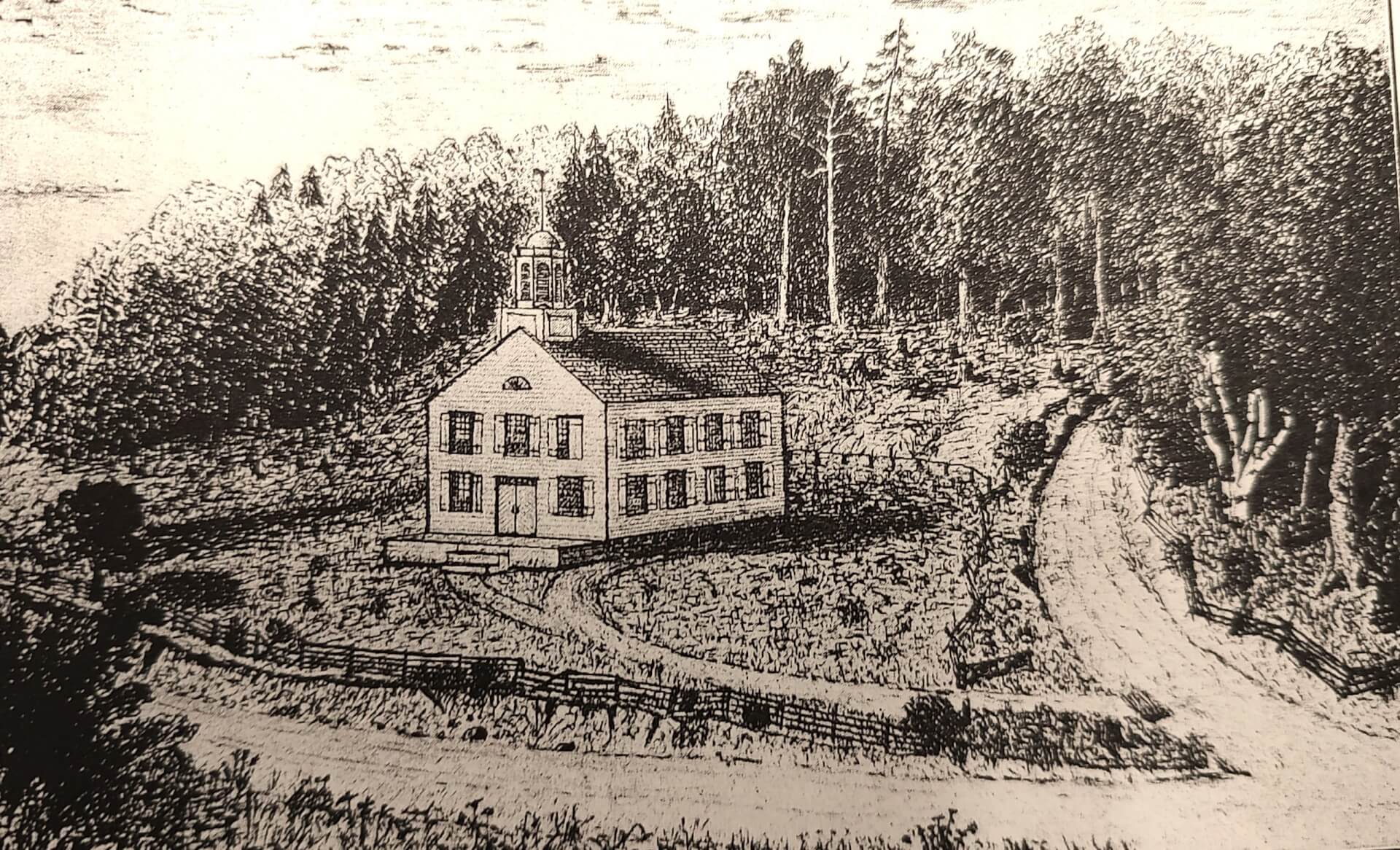
Learn More

Continue reading