1775: The First Year of Revolution – Albany Steps Up
Written by James Richmond
This is the second in a series of articles highlighting the 250th anniversary of the real beginning of the American Revolution in upstate New York and specifically Albany County, which in 1775 stretched from Kingston north to Lake George.

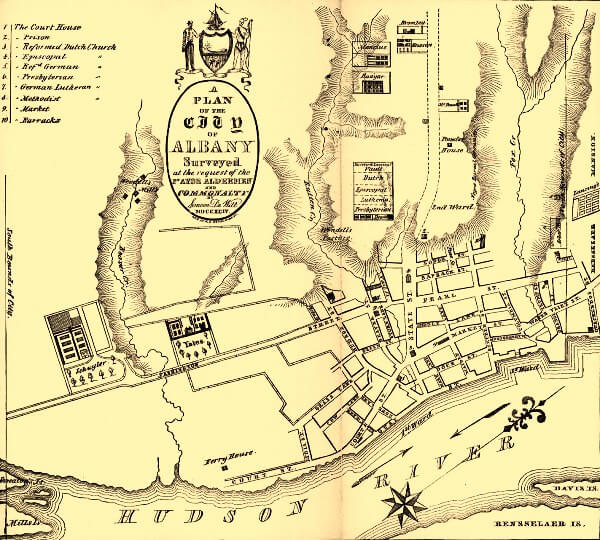
Pictured: Albany Street, 1775.
The 56 Delegates to the First Continental Congress returned from Philadelphia to their home communities in November 1774, intent on taking the steps necessary to pressure the British Government to rescind the Intolerable Acts by imposing restrictions on trade between the American Colonies and the homeland. The principal mechanism to accomplish this goal was implementation of the Continental Association through the establishment of committees at the local level.
The speed at which this structure was put in place varied by colony and even by counties, districts, and towns. Colonies who had led the resistance to increasing British overreach during the previous decade were first to step up. New England and Virginia established their committees in November and December 1774.
New York was a Colony of divided loyalties in 1775. Economic ties between the city merchants and maritime interests, and their British based trading partners fueled strong support for the status quo. It was not until April 1775 that the colony’s newly formed Provisional Congress endorsed the Continental Association. Even with that, only three of New York’s thirteen counties displayed any enthusiasm for the approaching confrontation with their British parent – Suffolk, Ulster…and Albany.
Albany’s support of the Patriot cause was influenced by its history. Although an important upstate city in the British colony for the previous 100 years, the power centers were still dominated by wealthy Dutch families. This influence, sometimes referred to by historians as the “Albany Spirit” fractured relationships between the Dutch and English along ethnic, economic and political fault lines. Disputes arose over control of the fur trade with the French Canadians and trade with the Iroquois Nation during the epic seventy-year conflict for control of North America between the French and British empires
In the years leading up to the Revolution that friction had only gotten worse. The outcome of the French and Indian war had destroyed the often-extralegal Dutch trading arrangements with the French. In addition, for decades Dutch merchants and Indian Commissioners, had controlled trade with the Iroquois. This monopoly had come to an end at the beginning of the last war, with the appointment of William Johnson as Indian Agent, based on his strong influence among the Mohawk River tribes. One final insult was the quartering of British troops in Albany barracks and homes during the war.
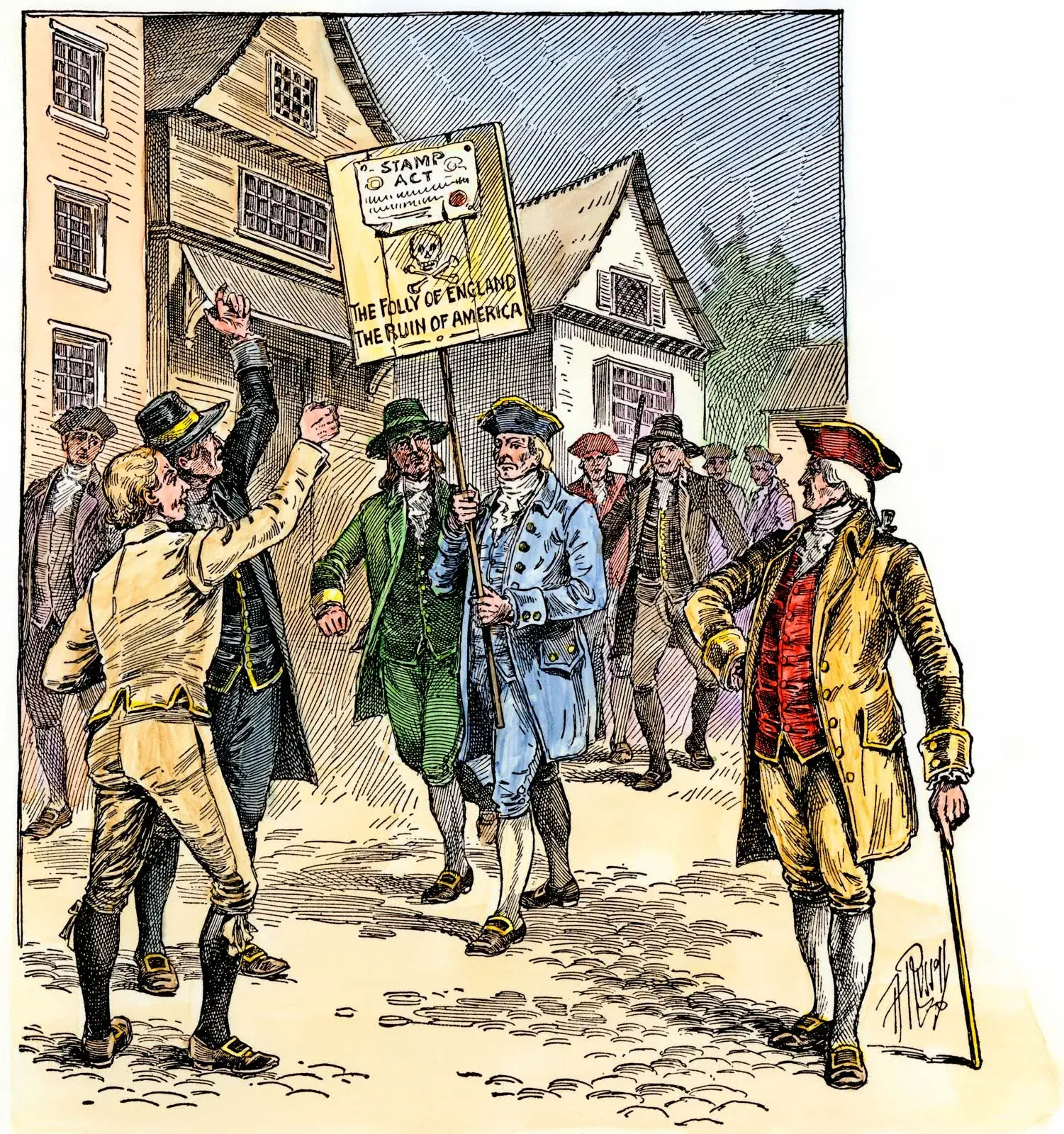
This all came to a head with the Stamp Act crisis in 1765. Fueled by a long-term animosity toward British authority, 94 overwhelmingly Dutch men subscribed to the Constitution of the Sons of Liberty of Albany which resolved “to persevere to the last in the vindication of our dear bought Rights and Privileges, the very Essentials of our peerless constitution.” Following the script of Sons of Liberty organizations in other cities throughout the colonies, they pressured Albany Postmaster Henry Van Schaak to deny that he had applied for the position of Stamp Distributor.
Subsequently, Albanians staged several mob actions designed to force British troops still stationed in Albany to be removed and in 1767 General Thomas Gage ordered the army to leave the city. Welcoming that decision, city residents turned their attention to events happening elsewhere in the colonies, watching with trepidation events in Massachusetts and Philadelphia during 1774, as described in our previous article.
So it was that, in response to the Continental Association, on January 24, 1775, eleven prominent Albany Dutchmen gathered in Richard Cartwright’s Inn, meeting as the Committee of Correspondence and approved Resolves supporting the actions of the First Continental Congress.
The eleven men all had residences in the City of Albany, but they understood their charter was to represent the entire county, the largest, most populous and diverse county in the colony of New York. To the south, in the Hudson River valley the Livingston and Rensselaer patroonships operated as fiefdoms reminiscent of medieval manors of landed aristocracy. To the west, along the Mohawk River as far as Schenectady and to the north, along the Hudson River to Saratoga, Dutch settlers prevailed. Some owned small farms, others such as Phillip Schuyler owned extensive settlements, often referred to as plantations. Tenant farmers and enslaved Blacks provided much of the labor to operate these estates.
However, two events occurred after the recent war with the French that contributed to important changes in the settlement of the County. First, the campaigns of that war had seen thousands of men from New England move though the county in 1755-1759 on their way to battles at Ft. Ticonderoga, Crown Point, Montreal and Quebec City. Exposed to this thinly settled land, these men saw an opportunity to move west from their land starved family enclaves in Massachusetts and Connecticut.
The second post-war event made that migration possible. In 1768 an agreement was reached with the Iroquois Mohawks which resulted in 406,000 acres of land known as the Kayadersosseras Patent north and west of Albany to be partitioned and opened for settlement. New Englanders began moving west, largely bringing their political views opposing British rule along with them.
How this combination of established families and new arrivals worked together to respond to the opening acts of the American Revolution will be discussed in our next article.

Sources:
A Factious People: Politics and Society in Colonial New York, Patricia Bonomi, 1971 A People in Revolution: The American Revolution and Political Society in New York, 1760-1790 Edward Countryman, 1981 Colonial Albany Social History Project, Stefan Bielinski,Historian. Extensive website of Albany Colonial History and Biographies Welcome To The Colonial Albany Project Website Revolutionary Albany: Organizing The Committee of Safety, Protection and Correspondence, Peter Hess, in New York Almanack, February 14, 2022 The Albany Stamp Act Riots, Beverly McAnear, The William and Mary Quarterly, October 1947 The American Revolution Comes to Albany, 1756-1776, Elizabeth Covart, in The Journal of the American Revolution, August 4, 2014 The People of Albany: The Frist 200 Years, Peter Hess, 2009
 Keep America’s Turning Point Alive

Keep America’s Turning Point alive for generations to come by making a tax-deductible donation to the Campaign for Saratoga 250, Inc. Our certified 501c3 nonprofit organization is dedicated to promoting awareness, education, and preservation of critical assets of the Battles of Saratoga. Your support will help promote historical awareness of new generations of people across the region, nation, and globe.