Author: Bill Teator

Knox Doc Premiers Tonight on PBS

Share
Copy link
URL has been copied successfully!

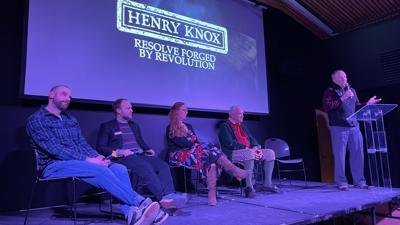
Photo by Alex Portal, Post-Star. Pictured left to right, film Director, Jordan Forkey, WMHT’s Will Pedigo, Saratoga County Historian & Saratoga 250 Chair, Lauren Roberts, Town of Saratoga Historian & Saratoga 250 Vice Chair, Sean Kelleher, Film Executive Producer & Campaign for Saratoga 250 Executive Director, William Teator.


SARATOGA SPRINGS – Move over Ken Burns, a new documentary produced by Campaign for Saratoga 250, Inc., and 32 Mile Productions, chronicling the Knox expedition as well as the massive, months-long 250th commemoration, premieres at 9 p.m. on March 10 on PBS.

“We have put so much time into this commemorative effort, but it’s only one moment in time,” said Saratoga County Historian Lauren Roberts during a special early screening of the film on March 5. “Being able to capture it as a film means that it can live on.”

The 28-minute special features one-on-one interviews with local historians, including Roberts; Saratoga town historian Sean Kelleher; Washington County 250th co-chair Pat Niles; Rensselaer County historian Kathryn Sheehan; site manager for the Schuylerville Mansion Historic Site Heidi Hill; New York State historian Devin Lander; Dr. Bruce Venter, Ph.D.; Revolution 250 MA Executive Director Jonathan Lane; and Siena University professor of history, Dr. Jennifer Dorsey, Ph.D.; as well as footage taken during the various events and reenactments, which took place between Lake George and Hillsdale, NY, throughout December 2025 and January 2026.

One of the biggest challenges for the production team was getting the right mix of historical shots featuring reenactors and behind-the-scenes-style clips for the documentary.

“I was trying to film stuff in a way, like, could this really be the 1770s, even though I’m surrounded by people?” explained 32 Mile Productions owner/Director Jordan Forkey after the screening.

Most of the work done by 32 Mile is in the pharmaceutical industry, but Forkey said everything they do is “docu-style” work, so transitioning to a historic documentary was smooth but daunting.

“Most of our work is three- to five-minute, short-form documentary stories,” he said.

The team is currently sitting on its biggest project, a film about the lead drummer for progressive rock band “Coheed and Cambria,” Josh Epphard, and his struggles with heroin addiction. The production company is currently negotiating with the band for distribution. In the meantime, their new Henry Knox film premiering nationwide via the PBS app is no small consolation.

“We didn’t know what we were getting ourselves into,” owner/senior producer Chuck Fernandez said. “It wasn’t really until we got into the footage that we were like, ‘oh wow, we really have something here.’”

Being a local production company based in Ballston Lake, the team said there was an unanticipated sense of pride that came with telling the Henry Knox story.

“Not only are we proud of the movie and the pieces that we make about the history, you learn about it over time, and you become proud to be a local,” senior editor Ryan Traver said.

For Nicholas Herder-Dwarika, director of photography, knowing that his work will be intrinsically tied to the history of America is an altogether unique feeling.

“At the 300th anniversary, if people want to look at this, our names, 32 Mile, and our actual names are tied to the production of this,” he said. “It’s weird and cool to think that somewhere along the lines, maybe some kid will be looking at my footage to write a paper or something.”

On a press tour, promoting his six-part documentary, “The American Revolution,” filmmaker Ken Burns told a group of students at Stillwater High School that he wanted his film to give the audience a sense of unknowing about the outcome.

“In history, it’s never certain it’s going to turn out the way you know it did,” he said at the time. “George Washington doesn’t know how it’s going to turn out, nor does the lowly private who’s unsure there at [the battle of] Freeman’s Farm whether he’s going to get up the energy and the nerve to attack.”

For Forkey and his team, they wanted to make a film where audiences could invest themselves in the character of Henry Knox, not just the accomplishment of his expedition.  

“I have to kind of learn to obsess over these people and kind of fall in love with them, and if the audience doesn’t do that, I feel like it’s a failure,” Forkey said of his work.

“At the end of this, you want to root for Henry Knox, but also you want to root for the people that come after Henry Knox,” Fernandez added.

For long-time historical reenactor Thomas Pettigrew, who starred in the film and portrayed Knox during much of the commemoration, it was the role of a lifetime.

“In my reenacting experience, this was the first time doing a first-person portrayal,” he said. “If you’re going to go out and say, ‘I am so-and-so,’ you have to be able to stay in first person and answer questions.”

For many living historians, portraying a historic character, whether real or fictional, requires them to retain a deep understanding of the person they’re portraying.

“I’m by no means an expert. I think what qualifies me as Henry Knox is I’m pretty close to his physical description,” Pettigrew quipped.

But in preparing to take on the role of Henry Knox, Pettigrew got to know a little bit about the man and found a common place to connect with the character.

“He was too young and inexperienced to know he couldn’t do it,” Pettigrew said of the 25-year-old bookseller, adding that it’s just as important to remember that Knox was far from alone in his endeavor. “We get caught up on Knox and forget the other people sometimes. Right down to the guys, the teamsters who were working the oxen and dragging the sleds themselves.”

Pettigrew said he’s proud to be a part of a community of living historians, and for the opportunity to be a part of Henry Knox’s ongoing legacy.

“I’m looking forward to royalties,” he joked. “I hope they spell my name right in the history books.”

PBS programming is booming with Revolutionary War content, including the aforementioned Ken Burns documentary series, “The Revolutionary War,” the NOVA series, “Revolutionary War Weapons,” and even offerings from our one-time oppressors, the BBC’s “Lucy Worsley Investigates: The American Revolution.”

But the local affiliate is always on the lookout for content that’s closer to home. The station has turned its “Field Trip” travel series loose on some of the most iconic Revolutionary War locations around the area, and later in the fall, a new hour-long documentary exploring America’s war for independence through the lens of food, featuring Amelia Simmons’ “American Cookery,” which was published in Albany in 1796, will drop.

“This is a perfect companion, it’s wonderful to have a local story that we can share with our audiences,” Will Pedigo, vice president and chief content and engagement officer for local PBS affiliate, WHMT Public Media, said at the screening on March 5. “We don’t have all the stories, but we want to air all the stories.”

Roberts said that the Campaign for Saratoga 250 is already working with the production team to plot out scenes for the upcoming Battles of Saratoga commemoration in 2027.

The special, titled “Henry Knox, Resolve Forged By Revolution,” will premiere at 9 p.m., March 10, on PBS and will be available to stream across the country via the PBS app.

Go to Post-Star

BE THE FIRST TO KNOW

Sign up for our email list to stay up-to-date on the Campaign for Saratoga 250.

Sign Up Now

  Keep America’s Turning Point Alive  icon-star-red

Keep America’s Turning Point alive for generations to come by making a tax-deductible donation to the Campaign for Saratoga 250, Inc. Our certified 501c3 nonprofit organization is dedicated to promoting awareness, education, and preservation of critical assets of the Battles of Saratoga. Your support will help promote historical awareness of new generations of people across the region, nation, and globe.

Learn More

Continue reading

Saratoga 250 Knox Ice Cream Event

Stewart’s “Knox Cannonball Crunch” Honors 250th Anniversary of Henry Knox’s Noble Train

Written by Christine Rush, Director of Public Relations, County of Saratoga

Share
Copy link
URL has been copied successfully!

Saratoga 250 Knox Ice Cream Event

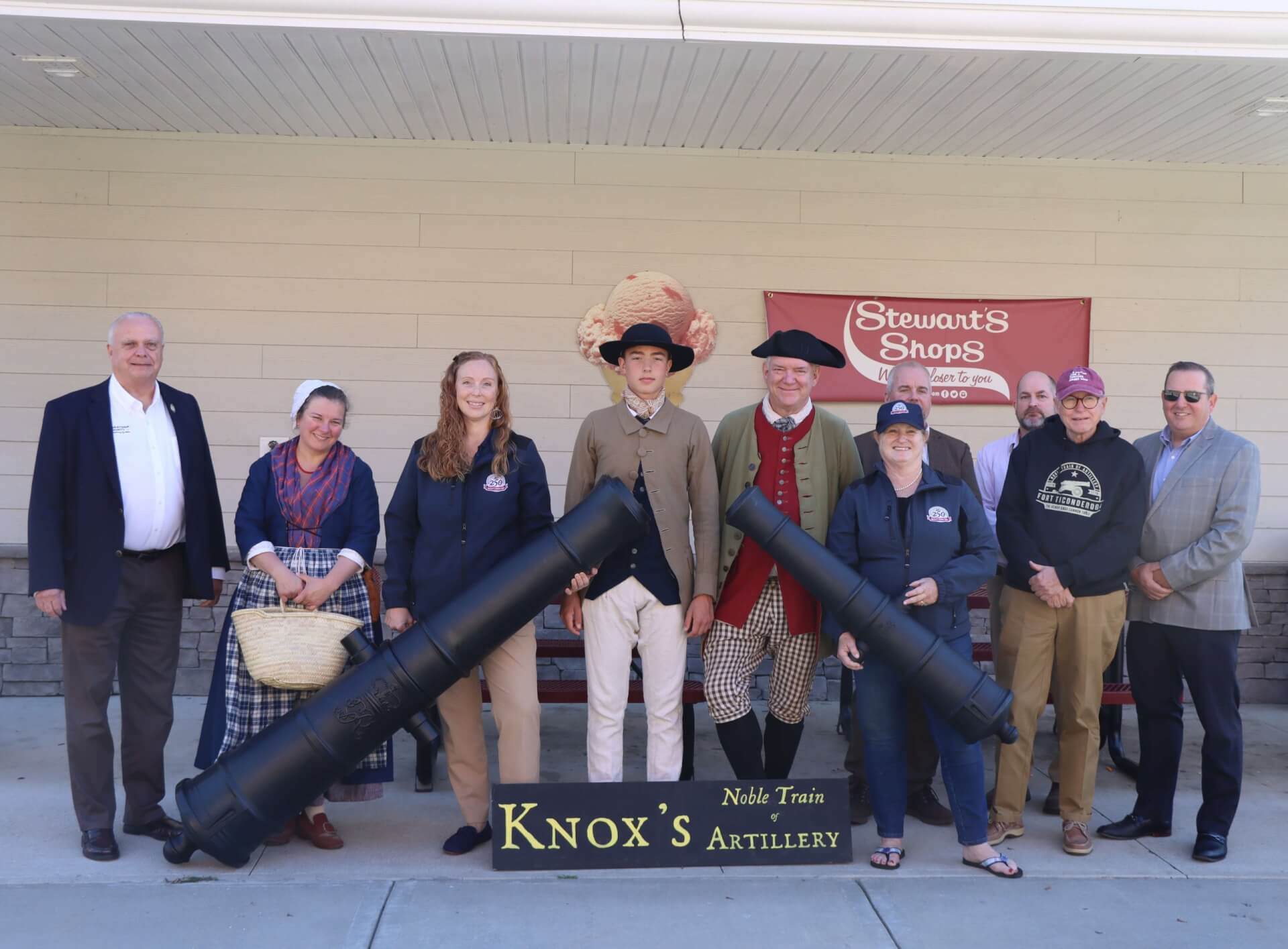
Saratoga 250 Commissioner members, Stewart’s Shops representatives, Saratoga County representatives and 18th Century Reenactors gathered October 1, 2025, to unveil Knox Cannonball Crunch commemorative scoop at Stewart’s Shops in Schuylerville.

Pictured (l-r): Saratoga County Administrator Steve Bulger, Reenactor and Saratoga County Assistant to the County Historian Anne Clothier, Saratoga County Historian and Chair of the 250th Commission Lauren Roberts, Reenactor Dane Roberts, Reenactor and Saratoga 250 Commissioner Sean Kelleher, Town of Saratoga Supervisor Ian Murray, Saratoga 250 Commissioner Heather Mabee, Stewart’s Shops Public Relations Manager Robin Cooper, Saratoga 250 Commissioner Bruce Venter, Stewart’s Shops Marketing Director William Majewski


SCHUYLERVILLE, NY – Saratoga 250 and Stewart’s Shops today unveiled a special Henry Knox themed Ice Cream Scoop ahead of the 250th anniversary of Henry Knox’s Noble Train of Artillery. Knox Cannonball Crunch took the victory in an ice cream naming battle that played out over the summer.

Saratoga 250 Commissioner members, Stewart’s Shops representatives, Saratoga County representatives and 18th Century Reenactors gathered the morning of October 1, 2025, to unveil this commemorative scoop at Stewart’s Shops in Schuylerville.

Saratoga 250 and Victory Circle Partner Stewart’s Shops commemorated the 250th Anniversary of Henry Knox’s Noble Train of Artillery with a special ice cream naming poll to honor Knox’s remarkable feat—hauling artillery from Fort Ticonderoga to Boston Harbor in the dead of winter (Dec 1775–March 1776)—by creating this limited-edition commemorative scoop. History buffs and ice cream enthusiasts had the option to vote for a variety of names with the top three contenders being Knox Cannons ‘n Cream, Knox Cannonball Crunch, or Knox Sled Tracks.

Knox Cannonball Crunch is available at more than 40 Stewart’s Shops located along the Knox Trail in New York now through the end of the year. These shops are located in: Ticonderoga, Bolton Landing, Lake George, Queensbury, Fort Edward, Gansevoort, Schuylerville, Stillwater, Mechanicville, Waterford, Cohoes, Watervliet, Rensselaer, East Greenbush, Schodack, Valatie, Kinderhook, Chatham, Claverack, Hudson, Hillsdale.

Knox Cannonball Crunch and select ice cream flavors will be also available on October 11th at Saratoga 250’s Saratoga Siege Weekend event in Schuylerville. This living history event celebrates Saratoga County’s revolutionary history both on and off the battlefield, including perspectives from all sides of the conflict and life in the area. The two-day, free family event takes place October 11th and 12th.

In December, Saratoga 250 will commemorate the 250th anniversary of the daunting, courageous, and successful winter 1775 journey of Henry Knox & patriots who delivered vital artillery from Ft Ticonderoga to the high ground over Boston Harbor causing the British to leave the city. The regional collaboration between states, counties, and historic sites will include a “cannon relay,” handing off a replica Revolutionary era cannon from place to place on its path from Fort Ticonderoga to the high ground over Boston Harbor in the winter of 1775-1776. Saratoga County will receive the cannon on December 13, 2025.

These events and the commemorative scoop are part of Saratoga County’s 250th commemoration of the Battles of Saratoga and American Revolution. Learn more at www.saratoga250.com.  

About Saratoga 250, America’s Turning Point

Saratoga 250, America’s Turning Point is Saratoga County’s official commemoration of the 250th anniversary of the American Revolutionary War, the Battles of Saratoga, and the significant role these battles played in the founding of our country. Guided by the Saratoga County 250th Commission of the Anniversary of the Revolutionary War and supported by the Campaign for Saratoga 250, America’s Turning Point’s mission is to promote historical preservation, educational enrichment, and heritage tourism surrounding the events of the American Revolution that took place in what is now Saratoga County. 

BE THE FIRST TO KNOW

Sign up for our email list to stay up-to-date on the Campaign for Saratoga 250.

Sign Up Now

  Keep America’s Turning Point Alive  icon-star-red

Keep America’s Turning Point alive for generations to come by making a tax-deductible donation to the Campaign for Saratoga 250, Inc. Our certified 501c3 nonprofit organization is dedicated to promoting awareness, education, and preservation of critical assets of the Battles of Saratoga. Your support will help promote historical awareness of new generations of people across the region, nation, and globe.
Learn More

Continue reading

1775 - continental-congress

1775: The First Year of Revolution – Prelude

1775: The First Year of Revolution – Prelude

Written by James Richmond

This is the first in a series of articles highlighting the 250th anniversary of the real beginning of the American Revolution. It was during 1775 that the tide of public sentiment turned toward the inevitability of Independence. This article provides the background for the transition of most colonists from considering themselves British subjects to citizens of a new nation during 1775. Future monthly articles will focus on how that transition occurred in upstate New York and specifically in Albany County, which in 1775 stretched from Kingston north to Lake George. 

1775 - continental-congress

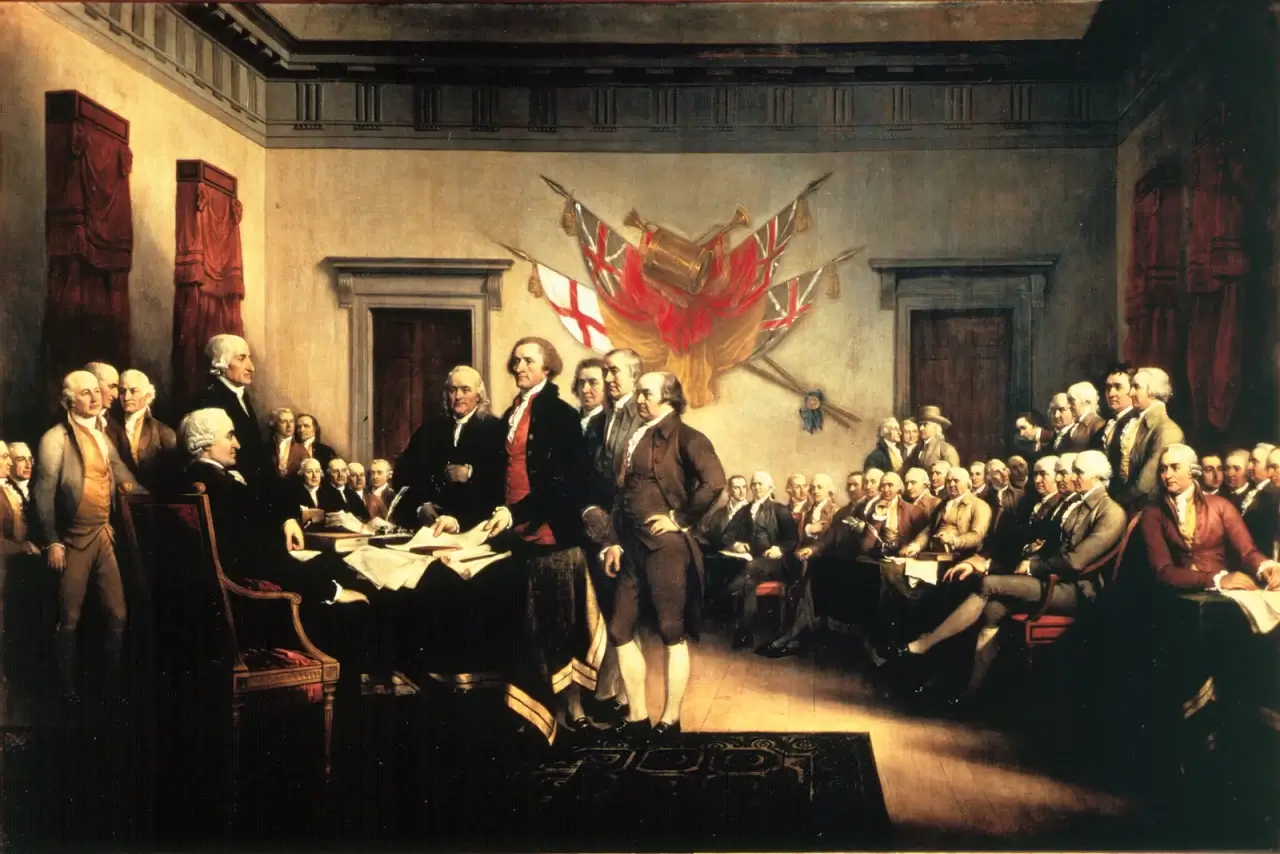
Pictured: Continental Congress.


Revolutions do not happen overnight. The storming of the Bastille in 1789 did not cause the French Revolution. The fall of Ft. Sumter in 1861 did not cause the American Civil War. So too, the Declaration of Independence proclaimed on July 4, 1776, did not ignite the American Revolution. It simply ratified a Revolution already happening in the countryside, towns and cities throughout the colonies.

Historians offer varying opinions on when the drive for Independence began and when it became inevitable. Many authors have chosen to begin the story with the Stamp Act crisis in 1765, remembering the rallying cry of the opponents of the Act: “No Taxation without Representation.” From there the narrative builds as events unfolded over the next decade: The Townshend Acts of 1767, The Boston “Massacre” in March 1770, followed by the Boston Tea Party in December 1773, and the Coercive Acts imposed by an irate British Parlement during 1774.

But the question remains – when did independence become inevitable?  This article proposes that the point of no return was initiated on October 20, 1774.

The Coercive Acts, called the “Intolerable Acts” in the colonies, systematically targeted different segments of Massachusetts society, the effective result being an overwhelming surge of resistance and growing support for independence. The Boston Port Bill prohibited trade through Boston Harbor, affecting merchants, shipping interests and consumers. The Administration of Justice Act stripped the Colony of the right to pursue legal action against Crown officials. The Massachusetts Government Act effectively annulled the colonies charter, an almost sacred document upon which the citizens relied on to make local governmental decisions. The Quebec Act expanded Canada’s boundaries south to the Ohio River, extinguishing the western claims of not only Massachusetts, but also Connecticut and Virginia. The act also restored the legitimacy of the Catholic Church, anathema to the protestant separatists who had founded the New England colonies in the early 1600s. Taken together, these laws alarmed not only Massachusetts, but other colonies fearful that similar restrictions would be placed on them.

As reaction grew after each new law arrived from England during the first six months of 1774, the colonies responded with a concerted effort to address these perceived injustices. Communication up and down the coastal colonial cities crystalized a desire to address the problem through collective action. On September 17 fifty-six delegates from twelve of the thirteen colonies (Georgia was not represented) arrived in Philadelphia to forge a response.

  • 1775 - Albany County Map

    Albany County Map
  • 1775 - Articles_of_Association,_page_3

    Articles of Association

The delegates of this First Contentental Congress were not all of one mind. Some pushed for independence, others sought reconciliation by appealing directly to King George to overturn the parliamentary actions. To asswage the conflicting views of the delegates the Congress did issue a Petition to the King, but also produced the Continental Association, a 14-point document that took several steps that moved the colonies closer to independence.

The Association, signed on October 20 by 53 of the 56 delegates, laid out specific steps to redress their grievances, including Non-Importation, Non-Consumption and Non-Exportation agreements. But perhaps the most important clause was the eleventh which in effect authorized the formation of a shadow governmental structure to seek compliance with the decisions of the Congress. It prescribed that “a Committee be chosen in every County City and Town…whose business it shall be to identify any person within the limits of their appointment who has violated this Association.” This was an open-ended invitation to supplant the existing rule of law as administered by British authorities.

Over the next several months these committees were formed throughout the colonies. It is estimated that 7,000 community leaders participated in these organizations and began the process of implementing the decisions of the First Continental Congress. In our next article we will explore the formation and early activities of the Albany County Committee of Correspondence and its impact on the lives of local residents. 

Sources:

Continental Association https://founders.archives.gov/documents/Jefferson/
1774: The Long Year of Revolution, Mary Beth Norton, 2020
           
1775: A Good Year for Revolution, Kevin Phillips, 2013
The People of Colonial Albany
https://exhibitions.nysm.nysed.gov/albany/whoarewe.html
Minutes of the Albany Committee of Correspondence 1775-1778, Vol 1, James Sullivan, 1923;

Keep America’s Turning Point Alive icon-star-red

Keep America’s Turning Point alive for generations to come by making a tax-deductible donation to the Campaign for Saratoga 250, Inc. Our certified 501c3 nonprofit organization is dedicated to promoting awareness, education, and preservation of critical assets of the Battles of Saratoga. Your support will help promote historical awareness of new generations of people across the region, nation, and globe.

Learn More

Continue reading

saratoga battlefield

Congress Approves Historic Park’s Renaming as “Saratoga National Battlefield Park”

December 19, 2024

Congress Approves Historic Park’s Renaming as “Saratoga National Battlefield Park”

Share
Copy link
URL has been copied successfully!

saratoga battlefield

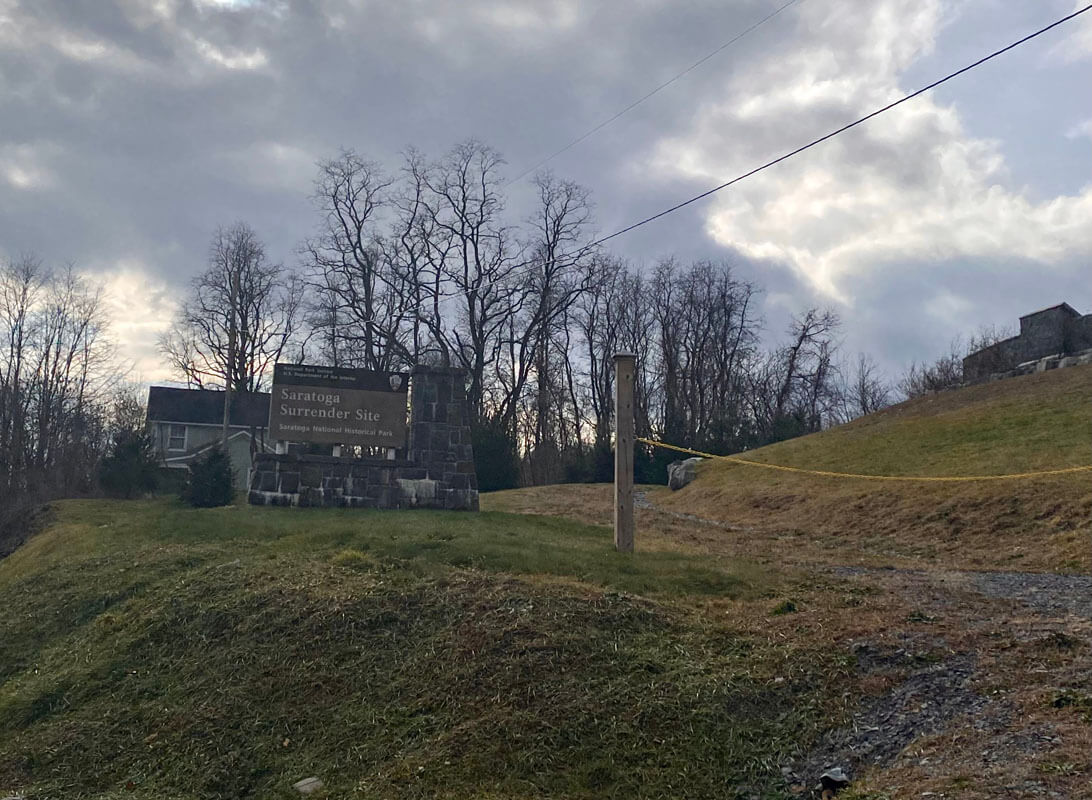
“Saratoga Surrender Site” just off Route 4 in the town of Saratoga on Dec. 18, 2024 – one of the sites comprising Saratoga National Historical/ Battlefield Park. Photo by Thomas Dimopoulos.


Original Source: Saratoga TODAY newspaper

SARATOGA — With Paris Hilton present in the House Chamber gallery supporting an unrelated cause, the House of Representatives on Dec. 17 approved an original Saratoga County Board of Supervisors request to rename the Saratoga National Historical Park as the Saratoga National Battlefield Park.

“That was the original park’s name and a unique identifier,” Board of Supervisors Chairman Phil Barrett said during the board’s approval of the resolution during its meeting in June, requesting the U.S. Congress and the National Park Service consider the name change as the park commemorates the Battles of Saratoga.

“The term ‘Battlefield’ more accurately reflects the historical significance of the site, emphasizing the crucial military engagements that took place (and) will enhance public understanding and appreciation of its historical importance,” stated the measure.

The site was originally named the Saratoga Battlefield Park, but “battlefield” was left off when it became a national park in the late 1930s.

“We believe that is a prudent step to provide tourists and visitors with something more obvious to review and know relating to the description of the park itself,” said Barrett, after the Supervisors’ 20-0 vote was approved to send the request off to Congress.

“I am proud to see my legislation renaming this historic site ‘Saratoga National Battlefield Park’ pass the House today with bipartisan support,” Congresswoman Elise Stefanik said, speaking on the House Floor Dec. 17 while advocating for the Strengthening America’s Turning Point Act bill to rename Saratoga National Historical Park to Saratoga National Battlefield Park. “This change will more accurately reflect the historical significance of the site as the turning point in the Revolutionary War and one of the most decisive American battles of the American Revolution.”

Stefanik introduced the bill to The House in July on behalf of herself and Congressman Paul Tonko.

Currently, Stefanik currently represents New York’s 21st Congressional District, which this most recent election cycle – slated to go into effect Jan. 20, 2025 – included the town of Saratoga in the 21st district. The town of Saratoga is where the majority of the handful of Saratoga National Historical Park sites are located – Victory Woods, Saratoga Monument, Surrender Site, and Schuyler House, among them.  

Tonko represents New York’s 20th Congressional District – which includes the battlefield location in Stillwater

 The bill, H.R. 8931, anticipates the renaming to be inclusive of those handful of Saratoga National Historical Park sites, not just the battlefield. 

History tells us American troops engaged in combat with the British army at Freeman’s Farm in September 1777, and at Bemis Heights a few weeks later. Overall, approximately 22,000 forces engaged in the battles with nearly 1,500 estimated casualties, according to the American Battlefield Trust. The American victory persuaded France to sign a treaty with the United States against Britain.

The year 2027 will mark the 250th anniversary of the battles at Saratoga, two battles which historians have called the turning point of the American Revolution. 

The Board of Supervisors resolution specified no budget impact would be felt at the county level related to the renaming. It is not known what costs may be incurred overall related to potential new signage, letterhead or other necessary material changes, or who will pay for them. An inquiry was sent to the National Park Service requesting information related to those potential costs.

Read the Article

BE THE FIRST TO KNOW

Sign up for our email list to stay up-to-date on the Campaign for Saratoga 250.

Sign Up Now

  Keep America’s Turning Point Alive  icon-star-red

Keep America’s Turning Point alive for generations to come by making a tax-deductible donation to the Campaign for Saratoga 250, Inc. Our certified 501c3 nonprofit organization is dedicated to promoting awareness, education, and preservation of critical assets of the Battles of Saratoga. Your support will help promote historical awareness of new generations of people across the region, nation, and globe.

Learn More

Continue reading