
Knox Doc Premiers Tonight on PBS


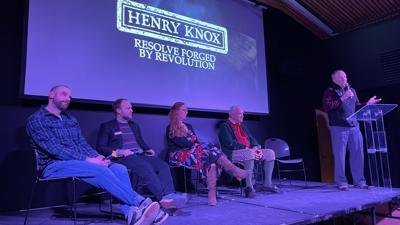
Photo by Alex Portal, Post-Star. Pictured left to right, film Director, Jordan Forkey, WMHT’s Will Pedigo, Saratoga County Historian & Saratoga 250 Chair, Lauren Roberts, Town of Saratoga Historian & Saratoga 250 Vice Chair, Sean Kelleher, Film Executive Producer & Campaign for Saratoga 250 Executive Director, William Teator.
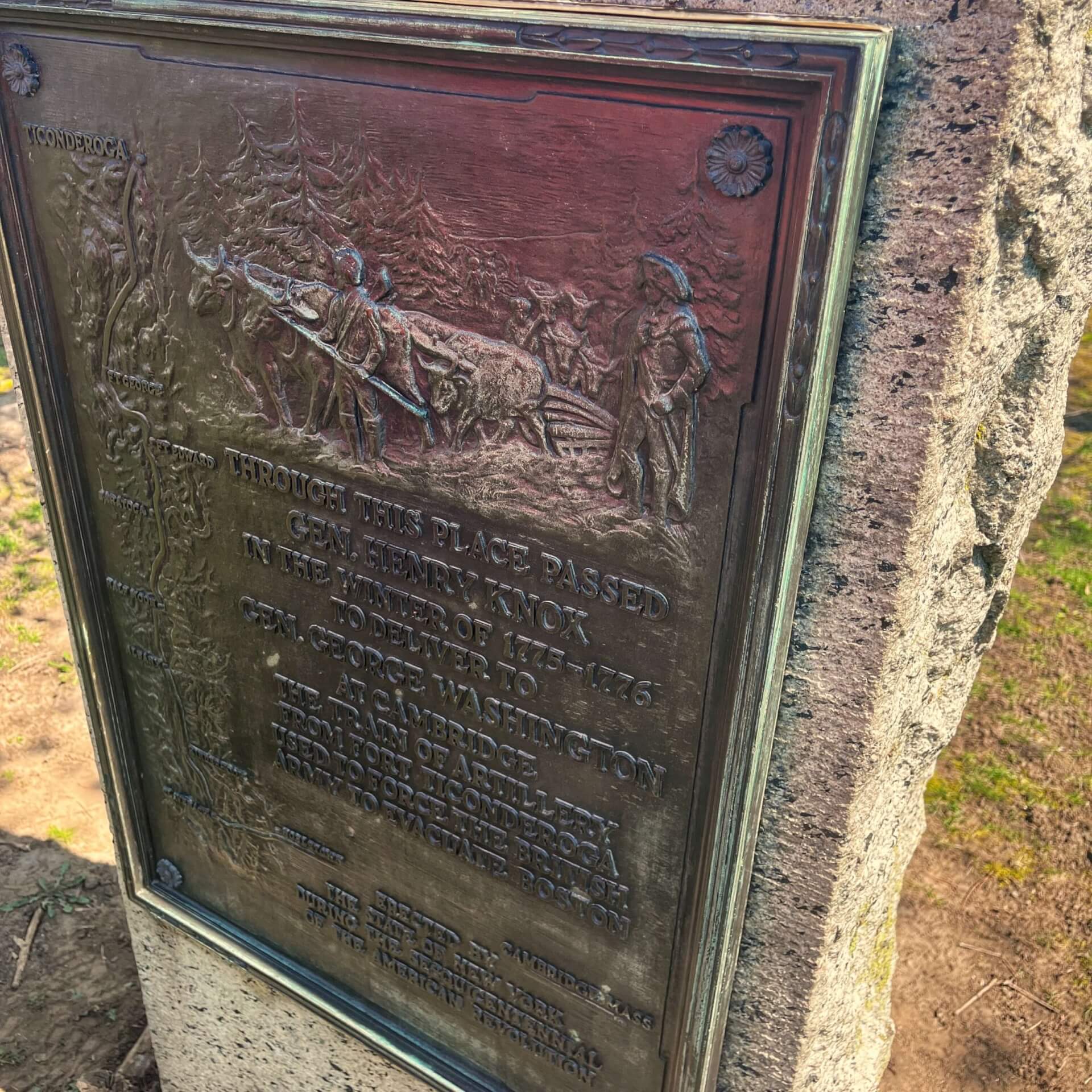
SARATOGA SPRINGS – Move over Ken Burns, a new documentary produced by Campaign for Saratoga 250, Inc., and 32 Mile Productions, chronicling the Knox expedition as well as the massive, months-long 250th commemoration, premieres at 9 p.m. on March 10 on PBS.
“We have put so much time into this commemorative effort, but it’s only one moment in time,” said Saratoga County Historian Lauren Roberts during a special early screening of the film on March 5. “Being able to capture it as a film means that it can live on.”
The 28-minute special features one-on-one interviews with local historians, including Roberts; Saratoga town historian Sean Kelleher; Washington County 250th co-chair Pat Niles; Rensselaer County historian Kathryn Sheehan; site manager for the Schuylerville Mansion Historic Site Heidi Hill; New York State historian Devin Lander; Dr. Bruce Venter, Ph.D.; Revolution 250 MA Executive Director Jonathan Lane; and Siena University professor of history, Dr. Jennifer Dorsey, Ph.D.; as well as footage taken during the various events and reenactments, which took place between Lake George and Hillsdale, NY, throughout December 2025 and January 2026.
One of the biggest challenges for the production team was getting the right mix of historical shots featuring reenactors and behind-the-scenes-style clips for the documentary.
“I was trying to film stuff in a way, like, could this really be the 1770s, even though I’m surrounded by people?” explained 32 Mile Productions owner/Director Jordan Forkey after the screening.
Most of the work done by 32 Mile is in the pharmaceutical industry, but Forkey said everything they do is “docu-style” work, so transitioning to a historic documentary was smooth but daunting.
“Most of our work is three- to five-minute, short-form documentary stories,” he said.
The team is currently sitting on its biggest project, a film about the lead drummer for progressive rock band “Coheed and Cambria,” Josh Epphard, and his struggles with heroin addiction. The production company is currently negotiating with the band for distribution. In the meantime, their new Henry Knox film premiering nationwide via the PBS app is no small consolation.
“We didn’t know what we were getting ourselves into,” owner/senior producer Chuck Fernandez said. “It wasn’t really until we got into the footage that we were like, ‘oh wow, we really have something here.’”
Being a local production company based in Ballston Lake, the team said there was an unanticipated sense of pride that came with telling the Henry Knox story.
“Not only are we proud of the movie and the pieces that we make about the history, you learn about it over time, and you become proud to be a local,” senior editor Ryan Traver said.
For Nicholas Herder-Dwarika, director of photography, knowing that his work will be intrinsically tied to the history of America is an altogether unique feeling.
“At the 300th anniversary, if people want to look at this, our names, 32 Mile, and our actual names are tied to the production of this,” he said. “It’s weird and cool to think that somewhere along the lines, maybe some kid will be looking at my footage to write a paper or something.”
On a press tour, promoting his six-part documentary, “The American Revolution,” filmmaker Ken Burns told a group of students at Stillwater High School that he wanted his film to give the audience a sense of unknowing about the outcome.
“In history, it’s never certain it’s going to turn out the way you know it did,” he said at the time. “George Washington doesn’t know how it’s going to turn out, nor does the lowly private who’s unsure there at [the battle of] Freeman’s Farm whether he’s going to get up the energy and the nerve to attack.”
For Forkey and his team, they wanted to make a film where audiences could invest themselves in the character of Henry Knox, not just the accomplishment of his expedition.
“I have to kind of learn to obsess over these people and kind of fall in love with them, and if the audience doesn’t do that, I feel like it’s a failure,” Forkey said of his work.
“At the end of this, you want to root for Henry Knox, but also you want to root for the people that come after Henry Knox,” Fernandez added.
For long-time historical reenactor Thomas Pettigrew, who starred in the film and portrayed Knox during much of the commemoration, it was the role of a lifetime.
“In my reenacting experience, this was the first time doing a first-person portrayal,” he said. “If you’re going to go out and say, ‘I am so-and-so,’ you have to be able to stay in first person and answer questions.”
For many living historians, portraying a historic character, whether real or fictional, requires them to retain a deep understanding of the person they’re portraying.
“I’m by no means an expert. I think what qualifies me as Henry Knox is I’m pretty close to his physical description,” Pettigrew quipped.
But in preparing to take on the role of Henry Knox, Pettigrew got to know a little bit about the man and found a common place to connect with the character.
“He was too young and inexperienced to know he couldn’t do it,” Pettigrew said of the 25-year-old bookseller, adding that it’s just as important to remember that Knox was far from alone in his endeavor. “We get caught up on Knox and forget the other people sometimes. Right down to the guys, the teamsters who were working the oxen and dragging the sleds themselves.”
Pettigrew said he’s proud to be a part of a community of living historians, and for the opportunity to be a part of Henry Knox’s ongoing legacy.
“I’m looking forward to royalties,” he joked. “I hope they spell my name right in the history books.”
PBS programming is booming with Revolutionary War content, including the aforementioned Ken Burns documentary series, “The Revolutionary War,” the NOVA series, “Revolutionary War Weapons,” and even offerings from our one-time oppressors, the BBC’s “Lucy Worsley Investigates: The American Revolution.”
But the local affiliate is always on the lookout for content that’s closer to home. The station has turned its “Field Trip” travel series loose on some of the most iconic Revolutionary War locations around the area, and later in the fall, a new hour-long documentary exploring America’s war for independence through the lens of food, featuring Amelia Simmons’ “American Cookery,” which was published in Albany in 1796, will drop.
“This is a perfect companion, it’s wonderful to have a local story that we can share with our audiences,” Will Pedigo, vice president and chief content and engagement officer for local PBS affiliate, WHMT Public Media, said at the screening on March 5. “We don’t have all the stories, but we want to air all the stories.”
Roberts said that the Campaign for Saratoga 250 is already working with the production team to plot out scenes for the upcoming Battles of Saratoga commemoration in 2027.
The special, titled “Henry Knox, Resolve Forged By Revolution,” will premiere at 9 p.m., March 10, on PBS and will be available to stream across the country via the PBS app.


BE THE FIRST TO KNOW
Sign up for our email list to stay up-to-date on the Campaign for Saratoga 250.
 Keep America’s Turning Point Alive

Keep America’s Turning Point alive for generations to come by making a tax-deductible donation to the Campaign for Saratoga 250, Inc. Our certified 501c3 nonprofit organization is dedicated to promoting awareness, education, and preservation of critical assets of the Battles of Saratoga. Your support will help promote historical awareness of new generations of people across the region, nation, and globe.