1776: The First Year of Independence – Common Sense
Written by James Richmond
This is the first in a series of articles highlighting the 250th anniversary of our nation’s independence, focusing on Albany County, New York, which, in 1776 stretched from Kingston north to Lake George. This series follows several articles published in 2025 under the title “1775: The First Year of Revolution,” also available at Saratoga250.com.

Benjamin Franklin Woodcut – Albany Plan of Union 1754
The British Constitution
The Declaration began with a list of thirteen accusations against the King of England, assisted by “Evil Counsellors, Judges and Ministers employed by him… to subvert…the Laws and Liberties of this Kingdome.” These charges pointed out his specific illegal actions, including
- Assuming and exercising a Power of dispensing with and Suspending of Lawes without the consent of Parliament;
- Raising and keeping a standing army within this Kingdom in time of Peace…and quartering of Souldiers contrary to law;
- Violating the freedom of Election of Members to serve in Parliament;
- Excessive Bayle required to persons Committed in Criminal Cases to elude the benefit of Lawes made for the liberty of Subjects;
- Illegal and cruell punishments inflicted.
Readers with a keen interest in our nation’s birth would recognize some of these accusations as representative of those in our Declaration of Independence. But they may also sense that something seems off. And they would be correct. These charges were levied 85 years earlier against the recently deposed King James II. Known as the Declaration of Rights, it listed these accusations as well as other actions that would henceforth be prohibited upon the ascension of William and Mary as King and Queen of England. This “Glorious Revolution” of 1688 formed the foundational principles of liberty which British citizens on both sides of the Atlantic used as a touchstone to assess the actions taken by the British government in the years leading up to the American Revolution.
This unwritten constitution was soon codified by John Locke in “The Second Treatise of Government”, published the following year. In it he outlined the powers of the people to curb absolute authority of both King and Parliament. This constraint was manifested in adherence to laws “for the common good” which formed the basis for the social contract between rulers and their citizens. Stating “where law ends, tyranny begins” he defined the difference between just and unjust kings:
The difference betwixt a king and a tyrant consists only of this: That one makes the laws the bounds of his power, and the good of the public the end of his government; the other makes all give way to his own will and appetite.
The intellectual leaders of the Revolution – John Adams, Thomas Jefferson and others – relied on Locke and other writers to form the basis for many of the well-known precursor documents to the Declaration of Independence, including Jeffersons 1774 “Summary View of the Rights of British America,” and the “Declaration and Resolves of the First Continental Congress” (October 1774). However, even these focused more on the illegal actions of the Parliament rather than a direct attack on the Monarchy.
The Desire for Reconciliation
To what extent did these theoretical arguments influence colonists in the year leading up to our Declaration of Independence? What other events shifted their view from reconciliation to revolution to independence during that time? Actions on the ground – open warfare at Lexington and Concord, Bunker Hill, and the Invasion of Canada are often cited as critical factors – and they were. However, there are other dimensions to the story.
In fact, in 1775 the majority of the delegates to the Continental Congress and the colonists they represented back home were loath to take that dangerous step, both from a natural affinity for their British homeland and fear of the unknown consequences.
Even as the Year of Independence began, many still hoped that a final break with the mother country could be avoided. Throughout 1775, the Continental Congress certainly had been providing mixed messages. While establishing an American army lea by George Washington and authorizing General Schuyler to launch an invasion of Canada, their petitions to the King still insisted they were defensive acts against Ministerial aggression.
Two documents forwarded to King George in July 1775 confirmed this hesitation to cross the Rubicon with a final break from the British Empire. In The Causes and Necessity of Taking Up Arms authored by Thomas Jefferson and John Dickinson, Congress justified their actions, but concluded on a conciliatory note:
Lest this declaration should disquiet the minds of our friends and fellow subjects…we assure them that we mean not to dissolve that Union which has so long and so happily subsisted between us. We have not raised armies with ambitious designs of separating from Great Britian.
In the second missive known as The Olive Branch Petition, Jefferson and Dickenson pleaded with the King “that such statutes as more immediately distress any of your Majesty’s colonies may be repealed.”
‘TIS TIME TO PART
While many hoped and prayed for a reconciliation, the British response soon became clear. In a speech opening Parliament in November, the King laid down the gauntlet, stating his “firm and steadfast resolution to withstand every attempt to weaken or impair the supreme authority of this Legislature over all the Dominions of my Crown.” Taking their direction from their King, Parliament declared that Massachusetts was in a state of rebellion and passed the Prohibitory Act, prohibiting all commerce with the colonies “during the continuance of the Rebellion.”
These decisions that squashed any hope of reconciliation reached the American coastal ports in January 1776. Coincidently, that same month a new pamphlet was published and quickly spread throughout the colonies. Written in plain language and not relying on theoretical arguments, it provided the justification for the final step toward Independence. Read and discussed in taverns throughout the colonies – including New York, Albany and the surrounding countryside – it was accepted as Common Sense. Most began to realize that there was no turning back, no return to dependency.
Many assumed Common Sense was written by one or more leaders of the Continental Congress – Jefferson, Adams or maybe even Benjamin Franklin, who had proposed a Plan of Union for the colonies in Albany in 1754. Instead, recent arrival Thomas Paine was the author. However, soon after its first appearance, Samuel Adams wrote two essays, Candidus and Sincerus which complimented Paine’s arguments. They were then printed together along with Common Sense, which only enhanced its impact. Over 120,000 copies were printed and read by many more. For colonists traumatized by open conflict, their hopes for reconciliation dashed, these new polemics provided not only the rationale – but also the courage to take that next step.
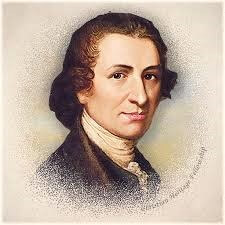
In Common Sense Paine challenged the case for reconciliation made by its supporters. He argued that the British government’s actions were not just a failure of leadership, but the result of a defective system. The twin tyrannies of a heredity monarchy and an aristocratic parliament inherently abridged the freedom of British citizens on both sides of the Atlantic. Paine also attacked the assumption that the colonies risked economic ruin if they broke away from the British Empire. In fact, an independent “Continental Union” would prosper, uninhibited by conflicts between European Powers that restrict trade and often lead to war. He went on to sketch out a remarkably prescient vision of how an independent national government might be organized as a Republic foreshadowing the structure institutionalized by the US Constitution 15 years later. His bottom line struck a chord with Americans lamenting the past and fearing the future. “Everything that is right or natural pleads for separation: “TIS TIME TO PART.”
The Religious Influence
The citizens of Albany County were certainly aware of all these events and arguments as the Year of Independence dawned. Opinions were formed during animated discussions on the streets of the city, among the long-established Dutch estates along the rivers, in the numerous taverns where men gathered to hear and share the news, and among the newly arrived neighbors from New England focused on establishing pioneer communities in the wilderness.
Also discussed in their churches. Many of the first arrivals to American shores were known as Dissenters escaping from what they viewed as the oppressive restrictions on their beliefs by the government-led Church of England. Pilgrims and Puritans in New England, as well as Dutch Reformed and German protestants in New York and Pennsylvania, were all driven by the desire for religion freedom, but often created their own top-down theocratic structures.
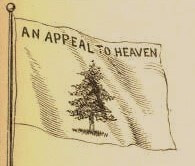
As the storm clouds of Revolution threatened, colonists turned to God for guidance. Both secular leaders and ministers relied on an “Appeal to Heaven” to support their call for Independence. John Locke had proposed that step in his Second Treatise: “If any men find themselves aggrieved and think the prince acts contrary or beyond trust…the appeal then lies nowhere but to heaven.” Patriots extended that concept to justify revolution against tyranny. The Pine Tree Flag symbolized the concept and was first flown on American Naval vessels and at the Continental Army’s encampment surrounding Boston in the fall of 1775.
The religious institutions in New York, and by extension Albany County, reflected the history of the colony. The Dutch established New Netherlands in 1624 until the British gained control 40 years later. By the time of the Revolution, the Calvinistic Dutch Reformed Church was still the principal denomination among the Dutch descendants in Albany County which included Rensselaer Manor.
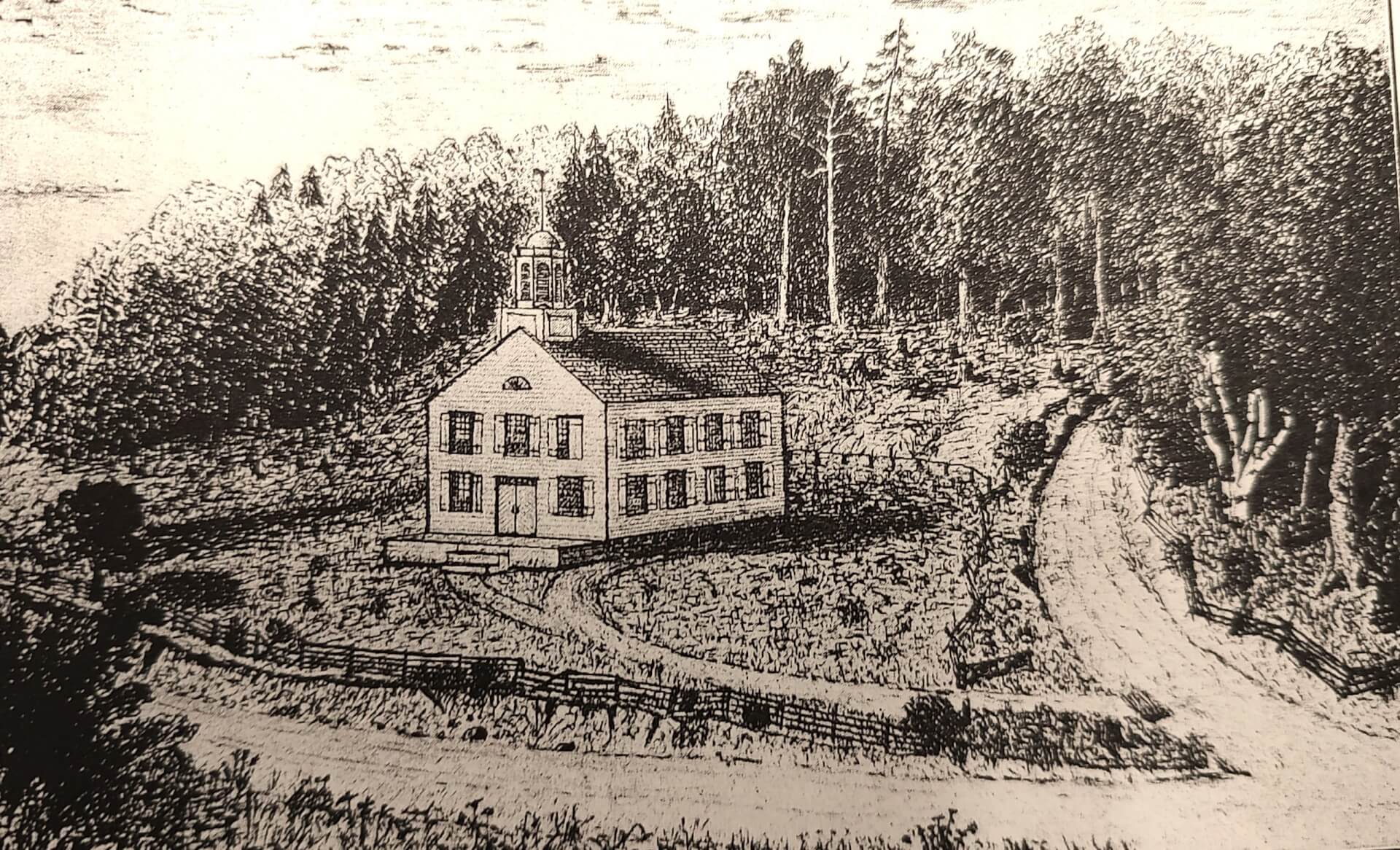
The First Church of Albany was the oldest church in upstate New York, founded in 1642. Several satellite congregations gathered adherents in Niskayuna, Schodack, Schaghticoke and Saratoga. Already chafing against British rule in the years leading up to the Revolution, their members overwhelmingly supported Independence. English traders, merchants and government officials attended St. Peters, the only Anglican congregation in the county. St. Peters was soon to close its doors as their Loyalist members fled to New York City and Canada.
In the years after the French and Indian War, New England settlers began to arrive in the county, bringing with them the dissenting religious experience of their forebears, which had undergone a significant upheaval known as the Great Awakening in the 1740s. Anglican minister George Whitefield toured the colonies, speaking to large crowds concerning the need for a personal relationship with God, and challenging the authority of their church leaders.
Especially in Connecticut, this bitter struggle between the conservative church hierarchy – the Old Lights – and those more focused on evangelical individualism – the New Lights – empowered communities there to stand up to authority. And it so happens that a significant majority of new arrivals in Albany County in the years leading up to Independence were Connecticut New Lighters.
The sermons of several Connecticut ministers provided guidance to help their congregants process the fast-moving events of 1775 and 1776. Rev. Dan Foster of Windsor published a compilation of six sermons in “A Short Essay on Civil Government” clearly outlining the tipping point:
When the supreme magistrate, by an arbitrary, illegal use of power, becomes a tyrant, he then ceases to be a magistrate; and his subjects are no longer bound by any laws of God, or nature, to obey him.
The Saratoga District became the home of many settlers exposed to similar sermons in their former churches. The first Connecticut church community to relocate was the Congregational church of Canaan, Litchfield County which moved to Stillwater, New York in 1762. Many of their members joined the Albany County Militia’s 13th regiment formed in 1775.
In 1768, Rev. Eliphalet Ball, a Yales graduate and ardent New Lighter, left his Presbyterian church in Bedford, New York on the Connecticut border and, along with several families from his congregation, purchased homestead lots available for sale in the newly surveyed lands of the Kayaderosseras Patent north of Albany. In 1775, Ball formed an independent church at “Balls-town” based on the principles of his Presbyterian beliefs. Of its twenty-five charter members, all but three families were subsequently represented in the 12th regiment. It is not a surprise that the Ballston and Saratoga districts became hotbeds of support for independence leading up to the Declaration.
Underpinned by British concepts of freedom, propelled by the outbreak of hostilities, rejected by their King and Parliament, and strengthened by their religious connections with their neighbors, most Albany County residents were prepared to take the final step to Independence as 1776 unfolded.
Sources:
A Short Essay on Civil Government, Reverend Dan Foster, 1775
American Scripture: Making the Declaration of Independence, Pauline Maier, 1997
Common Sense, Thomas Paine, January 1776
History of Saratoga County, Nathaniel B Sylvester, 1878
Shadows: The Life and Times of Eliphalet Ball, Katherine Briaddy, 1991
The Causes and Necessity of Taking Up Arms, Thomas Jefferson and John Dickinson, 1775
The Common Cause, Robert G. Parkinson, 2016
The Declaration of Rights, London, 1688
The Second Treatise of Government, John Locke, 1690
The Spark of Independence, History Book Club, 1997
The Story of Old Saratoga and History of Schuylerville, John H. Brandow, 1900
The Will of the People: The Revolutionary Birth of America, T.H. Breen, 2019
Under the Cope of Heaven, Patricia U. Bonomi, 1986
 Keep America’s Turning Point Alive

Keep America’s Turning Point alive for generations to come by making a tax-deductible donation to the Campaign for Saratoga 250, Inc. Our certified 501c3 nonprofit organization is dedicated to promoting awareness, education, and preservation of critical assets of the Battles of Saratoga. Your support will help promote historical awareness of new generations of people across the region, nation, and globe.