1775: The First Year of Revolution – The Loyalist’s Choice
Written by James Richmond
This is the sixth in a series of articles highlighting the 250th anniversary of the real beginning of the American Revolution in upstate New York, focusing on Albany County which, in 1775, stretched from Kingston north to Lake George.

Abraham C. Cuyler 1742-1810
In mid-July 1775, just as the supporters of the American cause were being challenged by the Johnson family and their Iroquois allies (article 5), the Tryon County Committee of Safety identified another threat to the American resistance movement. The Mayor of Albany, Abraham Cuyler, “Being suspicious as a Tory against American Liberties” was traveling westward along the Mohawk River “perhaps carrying ammunition or other warlike stores.” The local committee searched his bateau, and finding no such articles of war “permitted him to pass on his journey”.
Abraham Culyer became Mayor of New York at the age of 28 in 1770, the third in his family to hold that position. His success was closely linked to the British establishment of Governor Tryon and Sir William Johnson. Therefore, one may not be surprised that he chose to remain loyal to the King. What may be surprising is that he actively served on the patriot led Albany Committee of Correspondence throughout 1775 and into 1776, attending dozens of Committee meetings during that time, after being called out by the Tryon Committee.
Culyer was not the only Loyalist who served on the Committee in 1775. Stephen De Lancey, the County Clerk and Surrogate Judge from the late 1760s, was elected to a position on the Committee in May 1775. He served until being labeled as “disaffected” after joining other Loyalists in a celebration of the King’s birthday at Cartwright’s Tavern in June 1776. He was among those deported to Hartford, Connecticut after that incident. Henry Van Schaack, native of Kinderhook and Albany Postmaster since 1757 first raised suspicions back in 1765 during the Stamp Act crisis when he was accused by the Sons of Liberty of applying for Stamp Tax Collector (article 2), served as a committee member from Kinderhook, a hotbed of opposition to the resistance. In 1776 he would be arrested and sent to Connecticut. Peter W. Yates, an Albany Alderman was elected to the Committee but soon resigned after publishing an article questioning the actions of the movement. Although long suspected as opponents of the patriot cause, all four men were frequent attendees at Committee meetings until their loyalty to the British Crown became public knowledge.
One may ask why. One answer is that neither those who supported Revolution, nor those opposed to it, knew what the future would bring. Although it may be true that after Lexington and Concord and especially after Bunker Hill, further conflict was inevitable, Independence was not. In fact, many colonists in mid-1775 fully expected a reconciliation, either based on a compromise solution regarding colonial rights, or a quick overwhelming victory by British arms.
A second, more subtle explanation, is that prior relationships of families, business and religion were difficult to sever in small communities such as the City of Albany and the surrounding Districts. This article will attempt to investigate both these aspects of the Loyalist choice.
The Loyalist position began to come into focus in the months after the First Continental Congress concluded its work in October 1774. At that Congress, delegate Joseph Galloway of Pennsylvania had offered a Plan of Union that would establish an American branch of the British Parliament as a response to the “No Taxation without Representation” rallying cry of the ardent patriots. The measure failed, setting the stage for the creation of the Continental Association which established the quasi-governmental structure under which the Albany Committee operated (article 2).
Others, who had their hopes dashed that the Congress would propose a peaceful reconciliation of the crisis, took up their pens in opposition. Writers focused on the fear of the unknown consequences of Congress’ actions. Peter Van Schaack, a prominent lawyer from Kinderhook, voiced his antipathy to the choice forced on the people by the Congress.
I cannot see any principle of regard for my country which will authorize me in taking up arms, as absolute dependence or independence are two extremes which I would avoid; for should we succeed in the latter, we will still be in a sea of uncertainty and will have to fight among ourselves for that constitution we aim at.
Others were even more vociferous. Samual Seabury, an Anglican minister from Westchester County, offered rationale for his direct opposition to the formation and actions of the Congress in two pamphlets, Free Thoughts and The Congress Canvassed, written to the merchants of New York City, on whom he lays the blame for supporting the Congress. Seabury warned of the potential for overreach by the Committees of Correspondance.
Remember your liberties and properties are now at the mercy of a body of men unchecked, uncontrolled by the civil power. You have chosen your committee, you are no longer your own masters.
Seabury’s pamphlets captured the attention of Alexander Hamilton, future son-in Law of Phillip Schuyler, who replied in his own polemic, A Full Vindication of the Measures of Congress.
Those who have studied the New York Loyalists in depth have identified several groups with relatively high support for the Loyalist cause. Often cited are Royally appointed officeholders, members of the Anglican church, proprietors of large estates, wealthy merchants and traders, and professionals – lawyers, physicians and ministers. In general, members of the upper classes of New York society. However, there were other dynamics at play. Possibly the most important consideration that cuts across all these categories was relationships – chiefly economic and family ties. New York Historian Alexander Flick, writing in the early 1900s, suggested another cohort of Loyalists that he labeled as the Conservative Masses who formed the great majority of the Loyalists who fought against the Americans. It is this alliance of the influential leaders and their followers that help explain the motivation of Loyalists in Albany County.
As political positions increasingly crystallized during 1775, Albany County residents were encouraged to make their positions known. Often the catalyst for their decisions was the pressure from the Albany Committee to sign on to the Association, declaring support for the decisions of the Continental Congress. On May 26 the Committee resolved that
Copies of the Association be lodged in the respective Wards of this City, to the intent that all such Persons, who have not yet subscribed to the Association may with greater Convenience do it, and it is hereby recommended to them to make their subscriptions by the first Day of June next after which time returns are to be made to the Committee of all such as decline it and similar mode is recommended to the Committees of the different Districts in the County.
This deadline was extended and often ignored, especially in the outlying districts. The countryside was slower to embrace the American cause than the city. For the most part they remained isolated from the effects of Parliament’s Coercive Acts that impacted residents in urban areas.
It has been stated that “all Loyalism was local.” That was clearly the case in Albany County and in the mid-Hudson Valley in general. While the city of about 3,000 residents overwhelmingly supported the American cause, the county-wide Loyalist population has been estimated at 20-25%, among the highest in New York.
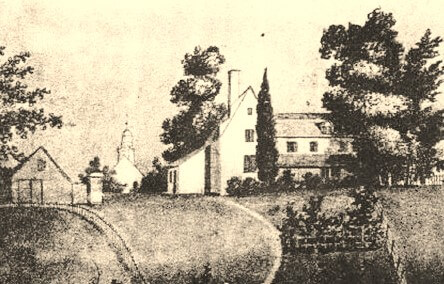
Several Albany County districts were known to have significant Loyalist support. South of the city, Kinderhook was largely a freehold district with a desire to defend their land from the Patriot Dutch proprietors of the adjacent Livingston and Rensselaer Manors. The Committee engaged in a protracted dispute with the district committee over the legality of their local elections in the fall of 1775, claiming that some local citizens were prohibited from voting. Dirck Gardineer, a loyalist-leaning local committee member, submitted a petition signed by 270 men that the elections were conducted properly. The Albany Committee disagreed and called for new elections as the year ended.
Within the manors themselves, tenant farmers were long at odds with their Patroons. Discontent with their perpetual rents and insecurity of land tenure resulted in a significant agrarian revolt in 1766. Ten years later these tenants tended to look to the British for support in protecting their interests from the overreach of the Van Rensselaer and Livingston families, leaders in the resistance movement.
North of Albany, American support was strongest among the largely Dutch settlements along the Mohawk and Hudson Rivers, areas under the influence of Philip Schuyler, and the central section of the Ballston District recently settled by emigrants from New England. However, three strong Loyalist leaders succeeded in attracting supporters among the local population in the outlying areas of the Saratoga and Ballston Districts.
To the west, Sir William Johnson shortly before his death had settled several hundred Scottish families in the Kingsborough Patent just north of Johnstown. Some also settled in the adjacent lands of the Kayaderosseras Patent in Albany County. Their heritage and allegiance to their benefactor influenced their choice in the conflict to come. One of those families was the Fraser brothers, William and Thomas, who settled near Ballston Lake. Their loyalty to the Johnsons and the Crown were to have significant consequences for their neighbors as the Revolution unfolded.

To the north, another pair of brothers, land speculators Edward and Ebenezer Jessup, had acquired large parcels of land in the foothills of the Adirondacks with the support of Governor Tryon and Johnson. They attracted settlers to work their lumbering and milling enterprises centered at Jessup’s Landing, later known as Corinth. Owing allegiance to the British establishment they actively supported the Loyalist cause and recruited from among these new arrivals. One of these was Thomas Loveless. By 1775 he had purchased 100 acres from the Jessups’ in Palmertown in the future town of Wilton, Saratoga County. He was to perform dangerous services for the British in the years to come.
In May 1774, retired British army Captain Daniel McAlpin purchased 900 acres on the west side of Saratoga Lake. He actively developed his property into a working farm which also became the headquarters for his recruitment of Loyalists to join him in resisting the Americans. The Albany Committee, aware of his activities, summoned him to join the Patriot cause in August 1775. He ignored their request for nine months.
At the end of 1775 these Loyalist-leaning residents of Albany County mentioned here were still going about their business, still well-respected members of their community, still hopeful that the long simmering dispute roiling the county and the other colonies would be resolved peacefully. But they were also preparing for the alternative outcome.
Sources:
Agrarian Revolt in Colonial New York 1766, in The American Journal of Economics and Sociology, Vol. 1, No. 2, 1942, Irving Mark
American Migrations 1765-1799, Peter W. Coldham, 2002
Choosing Sides, in The Journal of American History, Vol 65. No 2, Sept 1978
I See Nothing But The Horrors of a Civil War, Alexander R. Cain, 2014
Loyalism in New York During the American Revolution, Alexander Flick, 1901
Minutes of the Albany Committee of Correspondence 1775-1778, compiled by James Sullivan, State Historian, 1923
Skullking for the King, J.Fraser, 1995
Suffering for the Crown: The Hudson Valley Loyalists, Kieran J. O”Keefe, 2021
The Congress Canvassed, Samuel Seabury, 1774
The Loyalists in Revolutionary America 1760-1781, Robert M Calhoon, 1965
The Minute Book of the Committee of Safety of Tryon County, 1905
Tory Spy, Daniel Lovelace, 2009
War on the Middleline, James E. Richmond, 2016
Welcome To The Colonial Albany Project Website Biographies, Colonial Albany Social History Project, Stefan Bielinski
Incivility in a Civil War, from the Other Revolutionaries, Stefan Bielinski
 Keep America’s Turning Point Alive

Keep America’s Turning Point alive for generations to come by making a tax-deductible donation to the Campaign for Saratoga 250, Inc. Our certified 501c3 nonprofit organization is dedicated to promoting awareness, education, and preservation of critical assets of the Battles of Saratoga. Your support will help promote historical awareness of new generations of people across the region, nation, and globe.