1775: The First Year of Revolution – Leadership
Written by James Richmond
This is the third in a series of articles highlighting the 250th anniversary of the real beginning of the American Revolution in upstate New York and specifically Albany County, which in 1775 stretched from Kingston north to Lake George.

Pictured: Albany City Hall ca 1775
When the Albany Committee of Correspondence met officially for the first time on January 24, 1775 in support of the Continental Congress’ measures against the Coercive Acts of the British Parliament, two often overlooked aspects of the formation of that committee began to emerge.
First, this committee was decidedly extra-legal. Governmental authority was vested in the City’s Common Council established under a municipal charter issued by Governor Thomas Dongan almost 90 years earlier. The mayor, recorder, sheriff and the clerk were appointed by the governor of the colony. Aldermen were elected annually, most often from among the prominent Dutch families of the City.
The Committee of Correspondence had no standing to take actions that could be deemed traitorous. They were treading on dangerous ground. Early meetings were held in inns and private homes. The first gathering was held at the tavern of Richard Cartwright who ironically would later be outed as a Loyalist and banished from Albany. Only when the outbreak of war tipped the power balance from the City Council to the Committee where they emboldened to meet at City Hall.
Secondly, the native language of most of those assembled was Dutch and their conversations may have reflected their ethnic origin. The initial patriot leadership in the City of Albany and much of the surrounding county was culturally distinct from the New Englanders who were at the point of the spear of the rebellion. The American Revolution was not just a revolt of Puritan merchants and farmers joining with Virginian aristocrats to achieve independence. The real history of the Revolution is much more granular and complex. Albany County’s unique ethnic mix would have an impact on local events throughout the war.
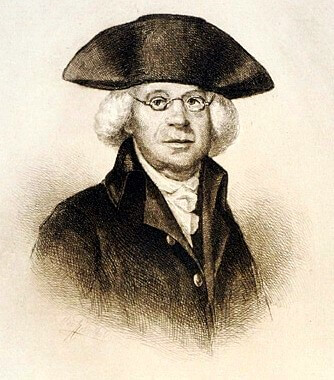
So who led these Albany patriots? One of the first acts of the Committee was to appoint a chairman. They unanimously selected Abraham Yates, Jr. Yates had risen from a working-class family of mixed heritage to become a lawyer and Albany County Sherrif during the French and Indian War. His experience dealing with the British military made him an early advocate for the rights of citizens and propelled him into politics, where he served on the Common Council for 20 years. Yates came an outspoken opponent of British actions, from the 1765 Stamp Act to the recent 1774 Coercive Acts. He was the obvious choice to lead the Albany Patriots as his later career confirmed. After serving 4 months leading the Albany Committee, he was chosen to serve on the New York Provincial Congress and was instrumental in drafting the State Constitution in 1777. Yates later served as State Senator and ended his career as Mayor of Albany from 1790 to his death in 1796.
One of the first actions of the January meeting was to approve the November resolves of the “former” Committee, which apparently had met in secret to implement the decisions of the First Continental Congress. By January this new committee was becoming bolder but still unsure of the extent of its authority. Consumed with their own affairs, outlying districts were slow to form their own committees as directed by the leadership, and few men outside of Albany attended the early County Committee’s sessions.
Five weeks after that first meeting the Committee received a letter from Assemblyman Phillip Schuyler indicating that the British controlled Colonial Assembly would not consider appointing delegates to the upcoming 2nd Continental Congress planning to convene in Philadelphia, and he urged the Committee to take the initiative. While supportive of the request, the committee was not willing to proceed on their own authority without the support of their District Committees. These outlying districts were called to Albany on March 21 but only a few responded, including – for the first time – representatives from Halfmoon and Saratoga. They appointed five members to the New York Provincial Congress, to select the delegates to the Continental Congress. The local supporters of Independence recognized that it was important to work closely with both local citizens and Colony-wide leaders for the movement to succeed. That effort was off to a slow start.
Events in the next few weeks gave the Committee a new perspective of the scope and urgency of their responsibilities and awakened the broader population to the reality of the coming conflict. On April 26th the Committee received word of the raid on Lexington and Concord and immediately reached out to the delinquent districts informing them that
The late troubles in the Massachusetts Bay, renders a meeting of the Committee of Correspondence necessary, which is appointed to be held at the House of Richard Cartwright on Wednesday the 10th day of May next, and as your District have not lately associated by Committees we conceive this step necessary.
The actual outbreak of the war galvanized support for the Patriot cause. At the May 10 meeting committee members attended representing Rensselaer Manor, Livingston Manor, Schenectady, Saratoga, Halfmoon, Schagtekoeke, Hoosic, Cambridge, Bennington and several other districts. In all 110 men became District Committeemen that day, officially joining the American cause.
They joined a strong and growing Albany City Committee well stocked with prominent citizens with leadership skills. Included were a previous mayor (Volkert P. Douw), the current Mayor (Abraham Cuyler) and two future Mayors (Abraham Ten Broeck and Abraham Yates). Several others went on to serve in the New York Provincial Congress, the Continental Congress and one, Robert Yates, would be a delegate to the Constitutional Convention in 1787.
The Albany County Committee’s abilities would soon be tested. On the same day this assemblage of patriots gathered at Albany City Hall, 100 miles to the north two New Englanders, Green Mountain Boys leader Ethan Allen and Colonel Benedict Arnold, a merchant-mariner from Connecticut, captured the British fortress at Ticonderoga. But could they keep it?

Sources:
Collections of the History of Albany Vol 1, J. Munsell 1865
Colonial Albany Social History Project, Stefan Bielinski, Extensive website of Albany Colonial History and Biographies Welcome To The Colonial Albany Project Website
Minutes of the Albany Committee of Correspondence 1775-1778, compiled by James Sullivan, State Historian, 1923
Revolutionary Albany: Organizing the Committee of Safety, Protection and Correspondence, Peter Hess, in New York Almanack, February 14, 2022
 Keep America’s Turning Point Alive

Keep America’s Turning Point alive for generations to come by making a tax-deductible donation to the Campaign for Saratoga 250, Inc. Our certified 501c3 nonprofit organization is dedicated to promoting awareness, education, and preservation of critical assets of the Battles of Saratoga. Your support will help promote historical awareness of new generations of people across the region, nation, and globe.