1775: The First Year of Revolution – Prelude
Written by James Richmond
This is the first in a series of articles highlighting the 250th anniversary of the real beginning of the American Revolution. It was during 1775 that the tide of public sentiment turned toward the inevitability of Independence. This article provides the background for the transition of most colonists from considering themselves British subjects to citizens of a new nation during 1775. Future monthly articles will focus on how that transition occurred in upstate New York and specifically in Albany County, which in 1775 stretched from Kingston north to Lake George.
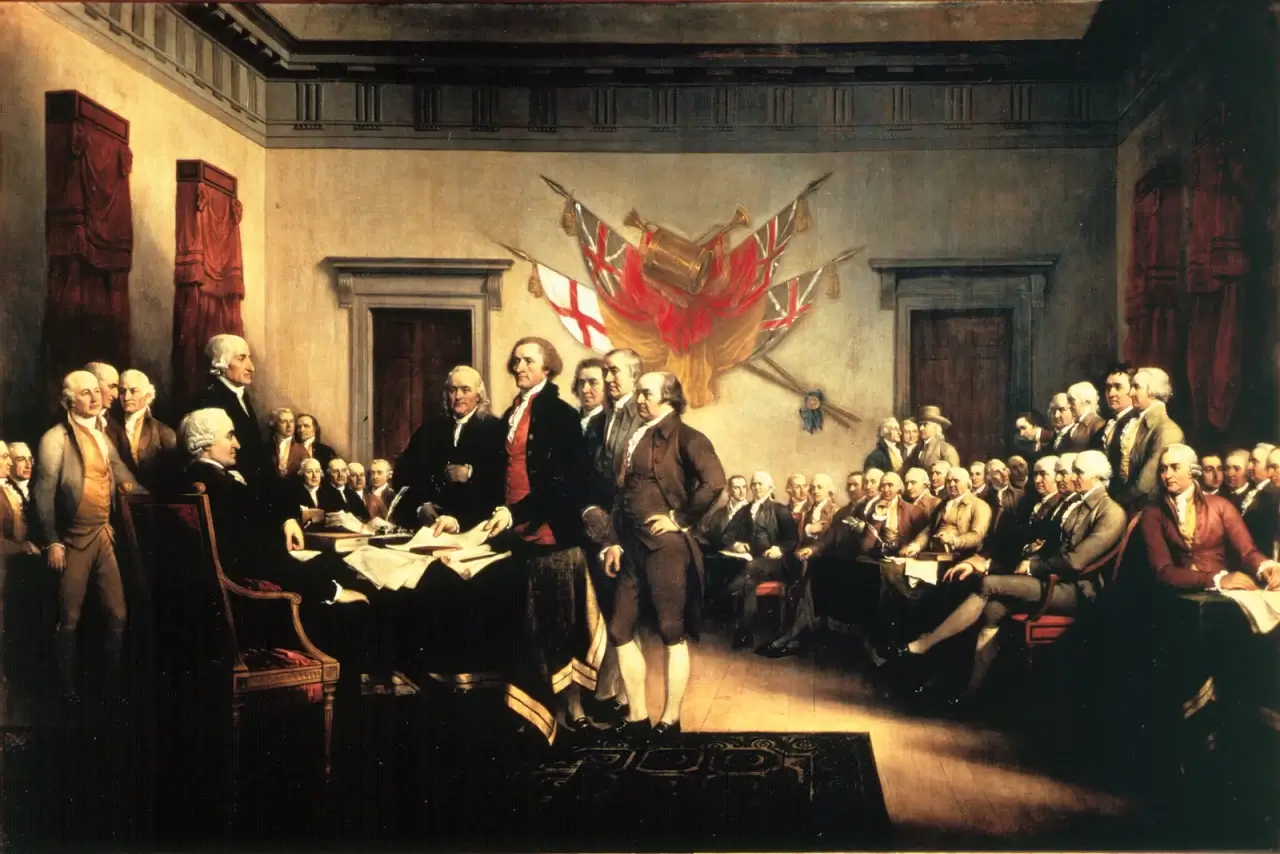
Pictured: Continental Congress.
Revolutions do not happen overnight. The storming of the Bastille in 1789 did not cause the French Revolution. The fall of Ft. Sumter in 1861 did not cause the American Civil War. So too, the Declaration of Independence proclaimed on July 4, 1776, did not ignite the American Revolution. It simply ratified a Revolution already happening in the countryside, towns and cities throughout the colonies.
Historians offer varying opinions on when the drive for Independence began and when it became inevitable. Many authors have chosen to begin the story with the Stamp Act crisis in 1765, remembering the rallying cry of the opponents of the Act: “No Taxation without Representation.” From there the narrative builds as events unfolded over the next decade: The Townshend Acts of 1767, The Boston “Massacre” in March 1770, followed by the Boston Tea Party in December 1773, and the Coercive Acts imposed by an irate British Parlement during 1774.
But the question remains – when did independence become inevitable? This article proposes that the point of no return was initiated on October 20, 1774.
The Coercive Acts, called the “Intolerable Acts” in the colonies, systematically targeted different segments of Massachusetts society, the effective result being an overwhelming surge of resistance and growing support for independence. The Boston Port Bill prohibited trade through Boston Harbor, affecting merchants, shipping interests and consumers. The Administration of Justice Act stripped the Colony of the right to pursue legal action against Crown officials. The Massachusetts Government Act effectively annulled the colonies charter, an almost sacred document upon which the citizens relied on to make local governmental decisions. The Quebec Act expanded Canada’s boundaries south to the Ohio River, extinguishing the western claims of not only Massachusetts, but also Connecticut and Virginia. The act also restored the legitimacy of the Catholic Church, anathema to the protestant separatists who had founded the New England colonies in the early 1600s. Taken together, these laws alarmed not only Massachusetts, but other colonies fearful that similar restrictions would be placed on them.
As reaction grew after each new law arrived from England during the first six months of 1774, the colonies responded with a concerted effort to address these perceived injustices. Communication up and down the coastal colonial cities crystalized a desire to address the problem through collective action. On September 17 fifty-six delegates from twelve of the thirteen colonies (Georgia was not represented) arrived in Philadelphia to forge a response.


The delegates of this First Contentental Congress were not all of one mind. Some pushed for independence, others sought reconciliation by appealing directly to King George to overturn the parliamentary actions. To asswage the conflicting views of the delegates the Congress did issue a Petition to the King, but also produced the Continental Association, a 14-point document that took several steps that moved the colonies closer to independence.
The Association, signed on October 20 by 53 of the 56 delegates, laid out specific steps to redress their grievances, including Non-Importation, Non-Consumption and Non-Exportation agreements. But perhaps the most important clause was the eleventh which in effect authorized the formation of a shadow governmental structure to seek compliance with the decisions of the Congress. It prescribed that “a Committee be chosen in every County City and Town…whose business it shall be to identify any person within the limits of their appointment who has violated this Association.” This was an open-ended invitation to supplant the existing rule of law as administered by British authorities.
Over the next several months these committees were formed throughout the colonies. It is estimated that 7,000 community leaders participated in these organizations and began the process of implementing the decisions of the First Continental Congress. In our next article we will explore the formation and early activities of the Albany County Committee of Correspondence and its impact on the lives of local residents.
Sources:
Continental Association https://founders.archives.gov/documents/Jefferson/
1774: The Long Year of Revolution, Mary Beth Norton, 2020
1775: A Good Year for Revolution, Kevin Phillips, 2013
The People of Colonial Albany https://exhibitions.nysm.nysed.gov/albany/whoarewe.html
Minutes of the Albany Committee of Correspondence 1775-1778, Vol 1, James Sullivan, 1923;
 Keep America’s Turning Point Alive

Keep America’s Turning Point alive for generations to come by making a tax-deductible donation to the Campaign for Saratoga 250, Inc. Our certified 501c3 nonprofit organization is dedicated to promoting awareness, education, and preservation of critical assets of the Battles of Saratoga. Your support will help promote historical awareness of new generations of people across the region, nation, and globe.